
Homemade vs. Store-Bought Sauces and Condiments
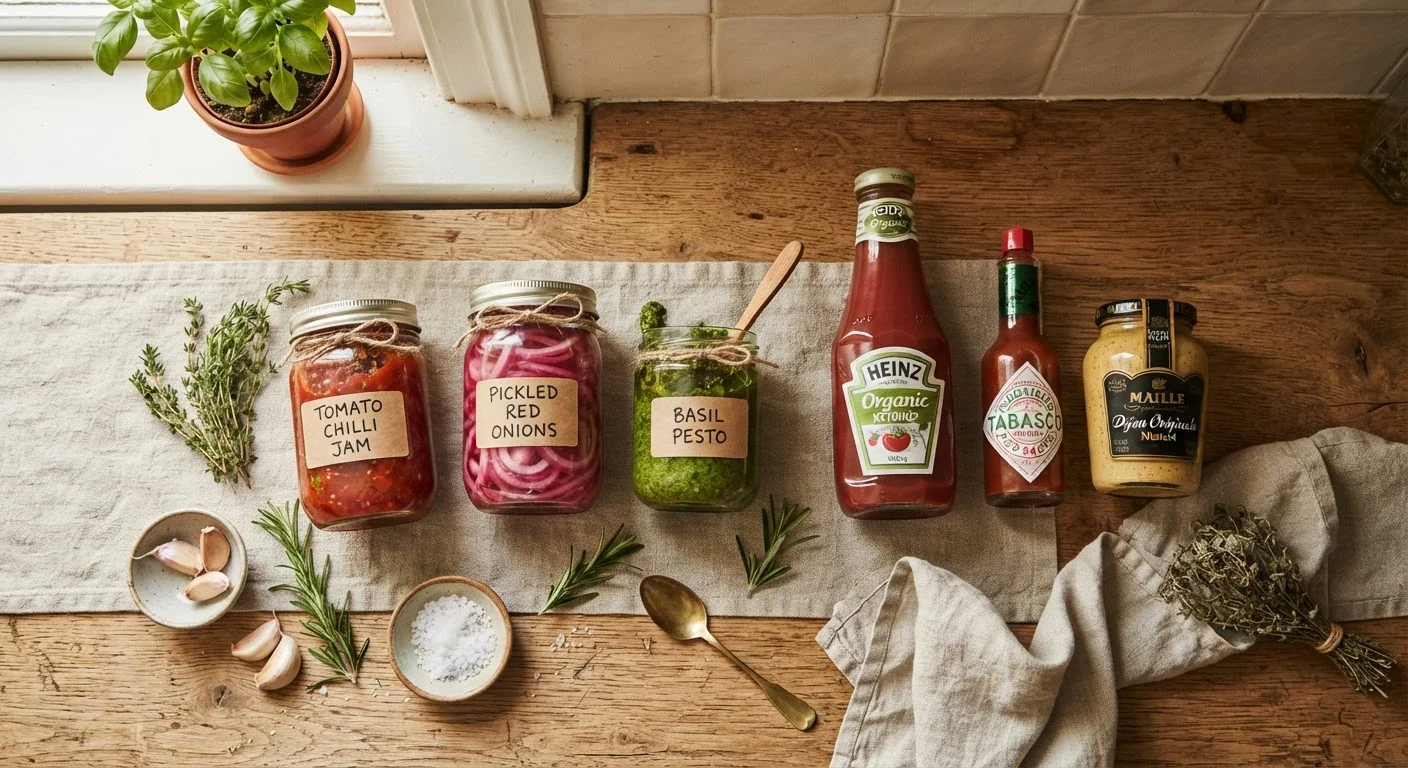
Photo credit: seeksmartgrowth.com
In this article
Weigh the cost, ingredients, and effort of making condiments at home against buying them off the shelf to decide what works for your family.
Key Takeaways
- Homemade sauces often cost less per ounce but require time, equipment, and ingredient planning.
- Store-bought condiments offer convenience and a long shelf life that homemade versions rarely match.
- Some condiments are worth making at home; others make more financial sense off the shelf.
- Sodium, sugar, and preservative levels vary widely between homemade and commercial versions.
- Batch preparation can close the time gap between homemade and store-bought for busy families.
Lower cost per ounce for high-volume sauces
Basic sauces like marinara or vinaigrette cost materially less per serving when made from pantry staples. Savings compound quickly for families that use these sauces several times a week.
Full control over sodium and sugar levels
Many commercial sauces contain added sugar and high sodium levels. Homemade versions let you set both to suit your family's preferences or dietary needs.
No preservatives or artificial additives
Homemade condiments contain only the ingredients you add, which is useful for families managing food allergies or trying to reduce processed food intake.
Flavor can be adjusted to household preference
A single homemade barbecue sauce recipe can be made smokier, spicier, or tangier without buying multiple products. This also reduces condiment clutter in the refrigerator.
Batch production reduces per-session effort
Making a large batch of pasta sauce or salad dressing once a week brings the active time per meal down to near zero and fits naturally into existing meal prep routines.
Shorter shelf life creates waste risk
Homemade sauces without preservatives spoil faster. A homemade mayo typically lasts about a week, compared to months for a commercial version, which is a real concern for smaller households.
Upfront ingredient cost can offset savings
Recipes requiring specialty ingredients like tamarind, fish sauce, or miso can cost more per batch than a store-bought equivalent, especially if those items are used infrequently.
Some condiments require unsafe-to-replicate processes
Fermented sauces, pressure-canned products, and condiments requiring precise pH control are difficult to make safely at home without specialized equipment and knowledge.
Time investment is real, especially on weeknights
Even a simple homemade sauce adds 15 to 30 minutes to meal prep. For families cooking after work, that time cost can outweigh any financial savings.
Consistency varies batch to batch
Store-bought condiments deliver identical flavor every time. Homemade versions change with ingredient quality, freshness of herbs, or small measurement variations, which some households find frustrating.
What you actually spend on condiments
Condiments and sauces are a small line on the grocery receipt until you add them all up. A jar of pasta sauce, a bottle of salad dressing, hot sauce, ketchup, mayo, and a specialty barbecue sauce can collectively cost $25 to $40 per shopping trip for a family that cooks regularly. Over a year, that number matters.
The per-ounce cost of homemade versions is generally lower when base ingredients such as canned tomatoes, oil, vinegar, and dried spices are already in the pantry. A batch of marinara made from a large can of crushed tomatoes, garlic, olive oil, and herbs costs roughly $2 to $3 and yields about 24 ounces. A comparable store-bought jar typically runs $3 to $6 for the same volume, depending on where you shop. See how pantry stocking affects these calculations in our guide to building a flexible pantry.
However, homemade savings assume you already have the supporting ingredients on hand. If a recipe calls for tamarind paste, fish sauce, or miso, the upfront cost of those items can make a single batch more expensive than the bottled alternative.
$2 to $3
Typical cost for a 24-oz homemade marinara batch
Based on average retail prices for canned tomatoes, garlic, olive oil, and dried herbs at U.S. grocery stores.
Up to 900mg
Sodium per serving in some commercial pasta sauces
Nutrition label data from common store-bought pasta sauce products shows wide variation, with some servings approaching 900mg of sodium.
5 minutes
Active prep time for a basic homemade vinaigrette
A standard oil-and-vinegar dressing with mustard and seasoning can be whisked together in under five minutes and stored refrigerated for up to two weeks.
Where homemade has a clear advantage
Ingredient control is the strongest argument for making sauces at home. Commercial condiments often contain high-fructose corn syrup, sodium in significant quantities, and preservatives that extend shelf life but that some families prefer to limit. A homemade ketchup or barbecue sauce lets you set the sugar and salt levels yourself.
Flavor customization is a practical benefit too. A family that prefers a smokier barbecue sauce or a more acidic vinaigrette can adjust a homemade recipe without buying multiple products. For families with food allergies or intolerances, making condiments from scratch removes the need to read labels or risk cross-contamination from shared manufacturing facilities.
Batch preparation reduces the time burden considerably. A double batch of salad dressing takes about five minutes and lasts a week or two in the refrigerator. Pairing homemade sauce production with other weekend or batch cooking tasks keeps the effort manageable. Our breakdown of batch cooking versus daily cooking covers how to structure that kind of prep.
Lower cost per ounce for high-volume sauces
Basic sauces like marinara or vinaigrette cost materially less per serving when made from pantry staples. Savings compound quickly for families that use these sauces several times a week.
Full control over sodium and sugar levels
Many commercial sauces contain added sugar and high sodium levels. Homemade versions let you set both to suit your family's preferences or dietary needs.
No preservatives or artificial additives
Homemade condiments contain only the ingredients you add, which is useful for families managing food allergies or trying to reduce processed food intake.
Flavor can be adjusted to household preference
A single homemade barbecue sauce recipe can be made smokier, spicier, or tangier without buying multiple products. This also reduces condiment clutter in the refrigerator.
Batch production reduces per-session effort
Making a large batch of pasta sauce or salad dressing once a week brings the active time per meal down to near zero and fits naturally into existing meal prep routines.
Where store-bought holds up
Shelf life is the practical advantage that homemade condiments cannot easily match. A commercial mayonnaise stays safe for months in the refrigerator after opening because of its controlled acidity and preservative content. A homemade version made with raw egg typically needs to be used within a week, which creates waste risk for smaller households.
Some condiments involve processes that are difficult or impractical at home. Fermented hot sauces, Worcestershire sauce, and shelf-stable pickles require controlled fermentation, specific pH levels, or pressure canning to be safe. For most families, buying these products is the safer and more sensible option.
Cost is also not always on the homemade side. Condiments used in very small amounts, such as horseradish, fish sauce, or Dijon mustard, are inexpensive per use when purchased in a bottle. Making them from scratch introduces ingredient sourcing challenges that rarely pencil out financially.
Shorter shelf life creates waste risk
Homemade sauces without preservatives spoil faster. A homemade mayo typically lasts about a week, compared to months for a commercial version, which is a real concern for smaller households.
Upfront ingredient cost can offset savings
Recipes requiring specialty ingredients like tamarind, fish sauce, or miso can cost more per batch than a store-bought equivalent, especially if those items are used infrequently.
Some condiments require unsafe-to-replicate processes
Fermented sauces, pressure-canned products, and condiments requiring precise pH control are difficult to make safely at home without specialized equipment and knowledge.
Time investment is real, especially on weeknights
Even a simple homemade sauce adds 15 to 30 minutes to meal prep. For families cooking after work, that time cost can outweigh any financial savings.
Consistency varies batch to batch
Store-bought condiments deliver identical flavor every time. Homemade versions change with ingredient quality, freshness of herbs, or small measurement variations, which some households find frustrating.
Condiments worth making versus buying
A practical framework is to identify which condiments your family uses most frequently and in large enough quantities that cost and ingredient control actually matter. High-volume, simple-to-make sauces are the best candidates for homemade production.
- Pasta or tomato sauce: high volume, simple ingredients, easy to freeze in batches
- Salad dressings: fast to prepare, no preservatives needed if used within two weeks
- Barbecue sauce: customizable, freezes well, costs significantly less per ounce homemade
- Guacamole and fresh salsas: best made fresh, no meaningful shelf-stable substitute
Condiments that make more sense to buy include mayonnaise (safety and shelf-life concerns outweigh savings for most households), hot sauces with fermentation, Worcestershire sauce, and any specialty condiment used only occasionally.
Fitting homemade sauce production into a realistic grocery strategy is part of stretching a grocery budget without losing flavor. The families who save the most are those who choose selectively rather than trying to make everything from scratch.
A note on home canning and food safety
If you plan to preserve homemade sauces through canning for shelf storage, follow guidelines from the U.S. Department of Agriculture (USDA) or the National Center for Home Food Preservation. Improper canning of low-acid foods like tomato-based sauces with added vegetables can create conditions for bacterial growth. Freezing is a simpler and safer storage method for most homemade condiments.

Author
Food & Drink Editorial Team
Food & Drink Editorial Team is the collective byline for our editorial team and contributor network. Articles published under this byline or an editorial pen name are researched, written, and reviewed according to our editorial standards for clarity, consistency, and independence before publication.
View all articles →