
Bodyweight Training vs. Home Equipment: Which Builds Better Habits for Families
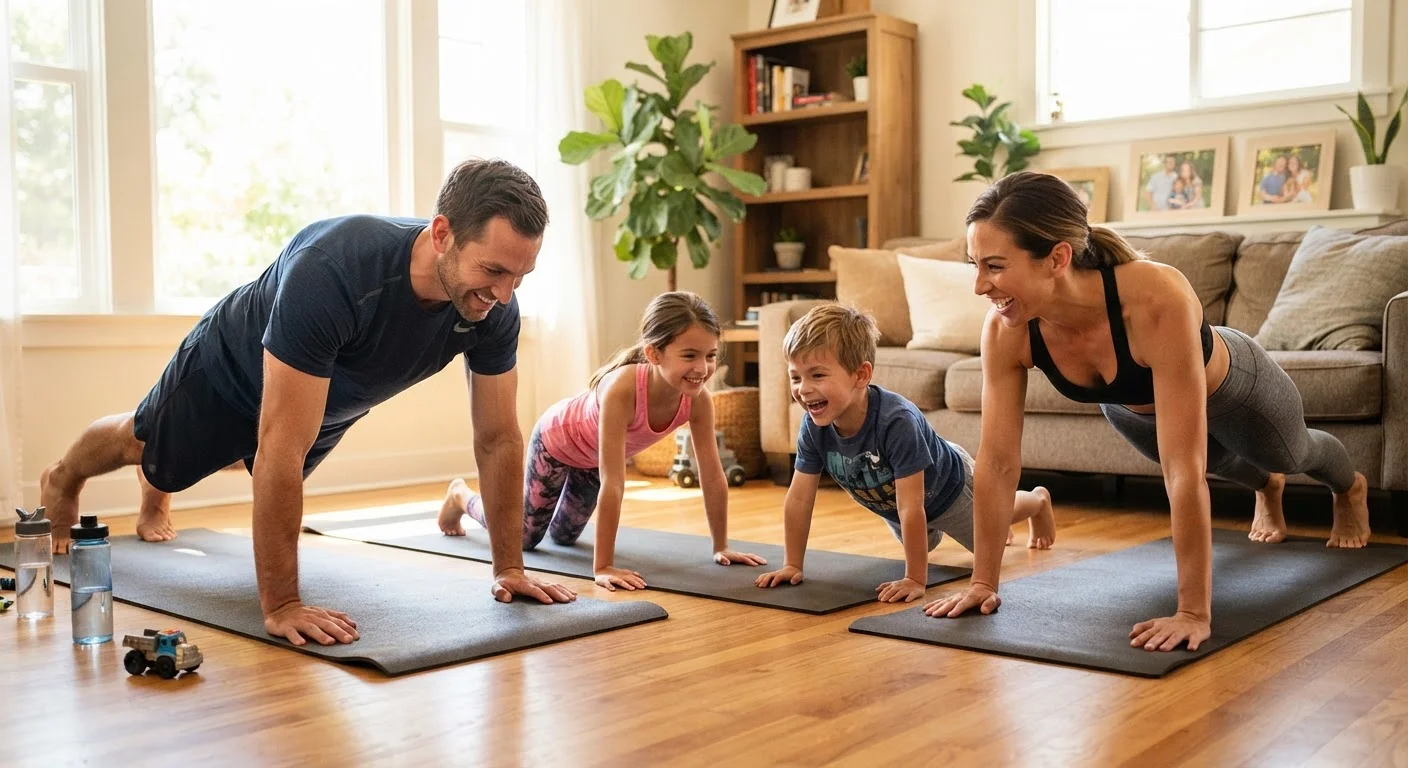
Photo credit: seeksmartgrowth.com
In this article
Weigh the real trade-offs between no-cost bodyweight workouts and budget home gear to find the right fit for your household.
Key Takeaways
- Bodyweight training costs nothing and can start immediately with no setup or storage space required.
- Home equipment adds resistance variety and measurable progression but involves upfront cost and storage.
- Habit consistency matters more than method for long-term family fitness outcomes.
- Both approaches can be combined at low cost as fitness levels and family needs change.
- Children generally engage well with bodyweight movement, making it a natural entry point for family routines.
What each approach actually involves
Bodyweight training uses your own mass as resistance. Squats, push-ups, lunges, planks, and jumping jacks are typical examples. No purchase is required, and the workout can happen in a hallway, backyard, or hotel room. The learning curve is low enough for children and adults to join the same session.
Home equipment covers a broad range, from a single jump rope to resistance bands, dumbbells, kettlebells, pull-up bars, or a compact multi-function station. The defining feature is that some financial outlay is involved upfront, and the gear needs a permanent or semi-permanent home in your space.
Both methods produce real fitness benefits when practiced consistently. The difference is in cost, flexibility, and the ceiling of physical challenge each one provides over time. Why consistency matters more than intensity explains why regularity is the stronger predictor of long-term results for most families.
Side-by-side comparison
The table below compares the two approaches across the factors most relevant to budget-focused households.
| Criterion | Bodyweight training | Home equipment |
|---|---|---|
| Upfront cost | None | Low to moderate |
| Space required | Minimal (floor space only) | Varies by gear chosen |
| Setup time per session | None | Minimal to moderate |
| Suitable for children | Yes, from young ages | Depends on equipment type |
| Progression ceiling for adults | Moderate (limited by body mass) | Higher with added resistance |
| Portability | Complete (travels anywhere) | Partial (bands travel; weights do not) |
| Habit barrier | Very low | Low to medium |
One factor the table cannot capture is motivation. Some family members respond better to tangible tools: having a set of bands hanging on the wall can serve as a daily reminder to exercise. Others find that freedom from equipment removes a mental barrier and makes the workout feel less formal.
Building habits the whole family can sustain
The research base on habit formation suggests that reducing friction is one of the most reliable ways to keep a new behavior going. Bodyweight training has the lower friction of the two: no assembly, no weight selection, and no concern about children handling heavy objects. A family can finish a ten-minute circuit before breakfast with zero preparation. For a ready-made starting point, see stretching routines the whole family can do before breakfast.
Home equipment, when chosen thoughtfully, can add structure that some adults need to stay engaged. Resistance bands, for example, make it easy to track progress because the color-coded levels provide a concrete marker of improvement. That sense of measurable advancement can sustain motivation past the initial weeks.
A practical path for many families is to start with bodyweight-only routines for the first month, then add one or two low-cost items if the habit has taken hold. This avoids spending money on gear that sits unused. Building a weekly wellness routine on a tight schedule offers a realistic framework for weaving exercise into a busy family week regardless of which approach you choose.
This article is for general informational purposes only and is not medical or fitness advice. Consult a qualified healthcare or fitness professional before starting a new exercise program, especially for children, older adults, or anyone with a health condition.

Author
Health & Fitness Editorial Team
Health & Fitness Editorial Team is the collective byline for our editorial team and contributor network. Articles published under this byline or an editorial pen name are researched, written, and reviewed according to our editorial standards for clarity, consistency, and independence before publication.
View all articles →