
Why Consistency Beats Intensity in Long-Term Family Fitness
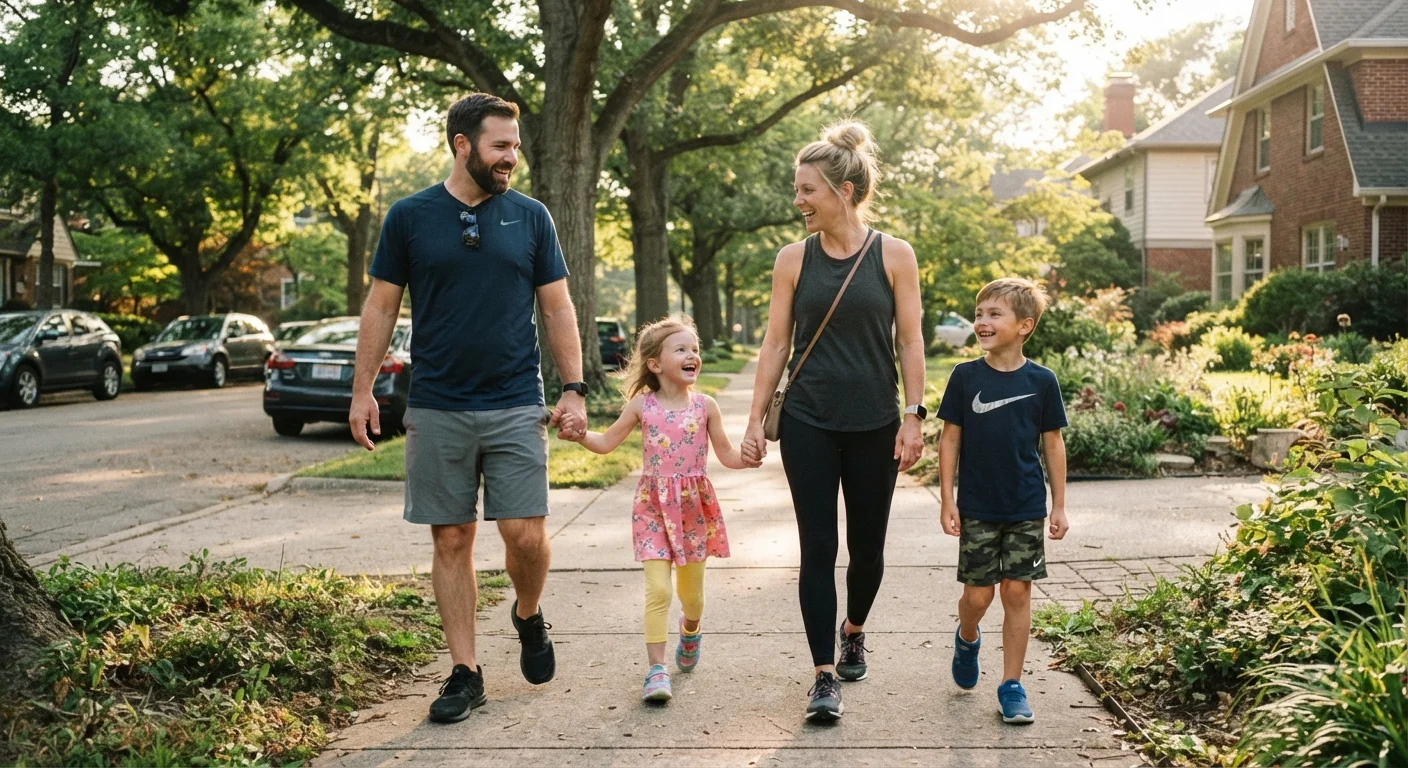
Photo credit: seeksmartgrowth.com
In this article
Explore why moderate, regular activity tends to produce more sustainable health outcomes than high-intensity bursts for most families.
Key Takeaways
- Moderate, regular activity tends to produce more lasting fitness gains than occasional intense workouts.
- Consistency lowers the risk of burnout and injury, two common reasons families abandon fitness routines.
- Most effective family fitness habits require no gym membership, special equipment, or significant expense.
- Building movement into daily routines rather than treating it as a separate event makes it far easier to sustain.
- Children who grow up in active households are more likely to carry healthy habits into adulthood.
The case against the all-or-nothing approach
Many families start a fitness push with the best intentions: a new gym membership, a strict weekly schedule, and high expectations. Within weeks, missed sessions pile up, motivation drops, and the whole effort stalls. This pattern is so common that researchers have a name for it: the intention-behavior gap.
The problem is not willpower. Intense, time-demanding routines are structurally hard to maintain alongside work, school, cooking, and every other demand on a family's week. When one session gets skipped, the mental cost of feeling like a failure can be enough to cancel the next one too.
A different starting point works better for most households: choose an activity level the whole family can repeat on an ordinary Tuesday, not just a good weekend. That floor might feel unimpressive at first, but it compounds. The long-term costs of staying sedentary are well-documented, and even modest, regular movement reduces them meaningfully over time.
What the research says about moderate activity
Public health guidelines from the U.S. Department of Health and Human Services recommend at least 150 minutes of moderate-intensity aerobic activity per week for adults, spread across multiple days. For children, the guidance is 60 minutes of movement most days. Both targets are achievable without a gym.
Moderate intensity means breathing harder than normal but still being able to hold a conversation. Brisk walking, casual cycling, shooting hoops, and dancing in the living room all qualify. These activities also happen to be ones most family members can do together, which adds a social dimension that makes continuation more likely.
High-intensity training has real benefits for certain goals and certain people, but it carries a higher injury risk and demands more recovery time. For a household managing packed schedules and a tight budget, those recovery demands can quietly undo a routine. Consistency across many weeks outperforms a few weeks of intensity followed by weeks of inactivity.
“The dose makes the poison, and the dose also makes the medicine. Moderate, consistent exercise is the dose most people can actually take every week for the rest of their lives.”
— Michael Joyner, Physiologist and researcher at Mayo Clinic
Practices that help families stay consistent
The families who maintain active lifestyles over years tend to share a few structural habits. These are not complicated, and none of them require spending money.
Set a minimum activity threshold the whole family can meet on a busy day
A 10-minute walk still counts. Families that define a minimum rather than an ideal are less likely to skip entirely when the week gets hard. Partial effort preserved over time outperforms perfect effort that stops after three weeks.
Choose activities that do not require special equipment or travel
Cost and logistics are two of the most common barriers to regular activity. Removing them reduces the number of reasons to skip. Bodyweight exercises, walking, and backyard play are all zero-cost and zero-commute options.
Track streaks rather than performance metrics
For families new to regular activity, tracking whether a workout happened matters more than how fast or how hard. Streaks build identity. Once a family thinks of itself as active, individual sessions become much easier to protect.
Involve children in choosing activities
Children who have input into what the family does are more engaged and less resistant. Their preferences also tend to involve movement naturally: cycling, swimming, tag, scavenger hunts. This increases participation without requiring anyone to push.
Schedule recovery as deliberately as exercise
Without planned rest, even moderate routines can lead to fatigue that derails the schedule. Recovery is not failure. Bodies adapt during rest, and building it into the plan prevents the exhaustion that causes families to abandon routines entirely.
Making activity feel normal, not optional
One of the most reliable ways to build consistency is to attach movement to things the family already does. Walk to the library instead of driving. Do a short stretching circuit while watching television. Ride bikes to the farmers market on Saturday mornings. When activity is woven into existing routines rather than scheduled as a separate event, it stops feeling like a chore and starts feeling like a normal part of the day.
Parks, trails, and free recreation spaces offer a low-cost way to vary activities without buying equipment or paying class fees. Rotating through different outdoor options also reduces boredom, which is another common reason routines fade.
Sleep and stress are often overlooked fitness factors. Poorly rested family members move less, recover more slowly, and make more impulsive food choices. The connections between sleep, stress, and physical health are relevant to any family trying to build lasting wellness habits. Protecting sleep is part of the fitness plan, not separate from it.
Once a manageable routine is in place, a realistic weekly wellness framework can help families layer in rest, nutrition, and other habits without overhauling their entire schedule.
This article provides general health and fitness information for educational purposes and is not a substitute for advice from a qualified healthcare professional. Consult a doctor or licensed fitness professional before starting a new exercise program, especially if family members have existing health conditions.

Author
Health & Fitness Editorial Team
Health & Fitness Editorial Team is the collective byline for our editorial team and contributor network. Articles published under this byline or an editorial pen name are researched, written, and reviewed according to our editorial standards for clarity, consistency, and independence before publication.
View all articles →