
Accent Walls: What They Are and When They Actually Help
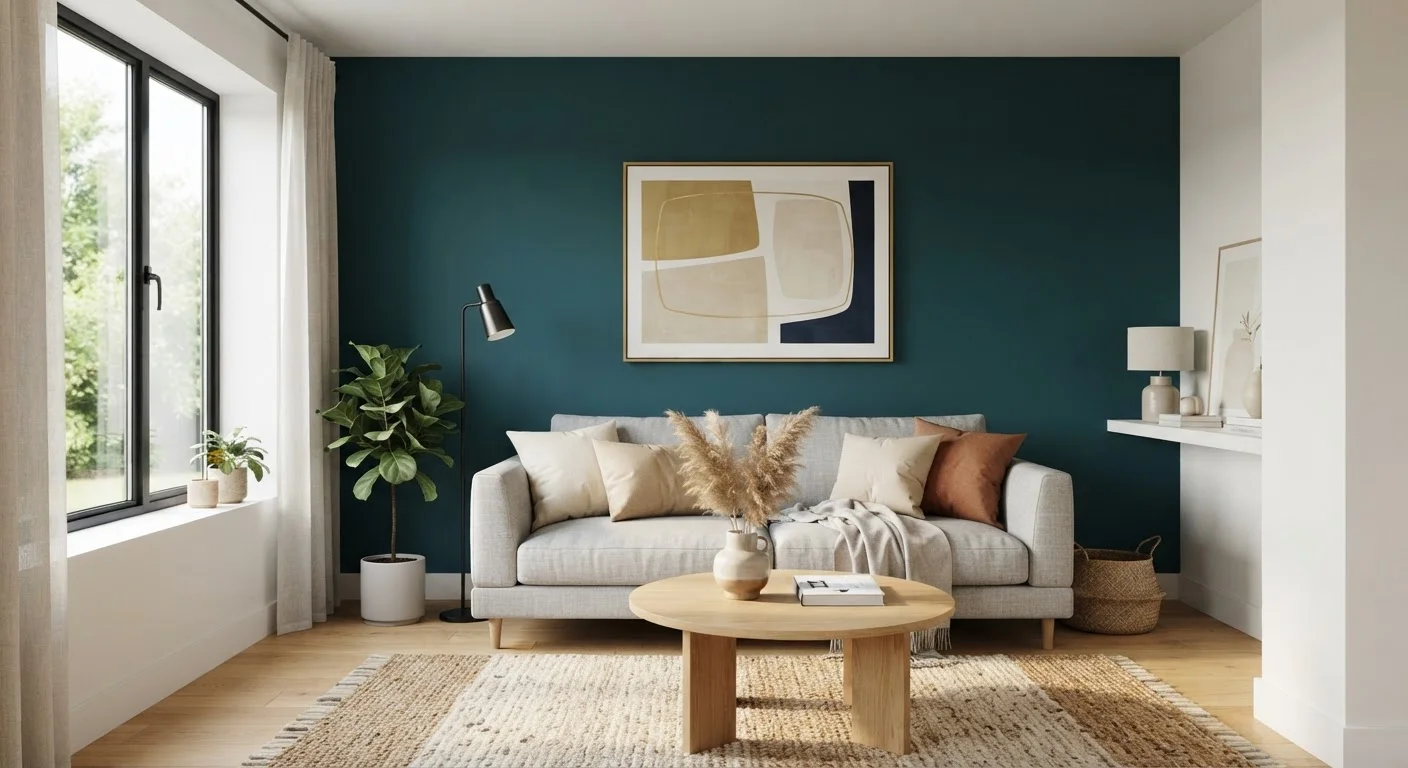
Photo credit: seeksmartgrowth.com
In this article
Learn what an accent wall is, how it functions in a room, and the situations where adding one makes visual sense.
Key Takeaways
- An accent wall singles out one surface in a room using color, texture, or pattern to create a focal point.
- It works best when the room already has a clear architectural or furniture anchor, such as a fireplace or bed.
- Choosing the wrong wall can make a room feel unbalanced or visually busy rather than intentional.
- Paint is the most accessible approach for families on a budget, while peel-and-stick wallpaper adds pattern with less commitment.
- An accent wall is not always the right solution; sometimes the issue is a different decorating problem.
What an accent wall actually does
A room with four identical walls gives your eye nowhere specific to land. An accent wall solves that by making one surface visually different from the others. Because the contrast is immediate, the eye travels to that wall first, which creates a sense of order and intentionality even in a sparse or simply furnished room.
The mechanism is straightforward: contrast draws attention. A wall painted two shades darker than its neighbors, or covered in a pattern while the rest are plain, stands out. That standing-out is the point. Designers call this creating a focal point, and it anchors furniture arrangements, tells a visitor where to look, and can make a room feel designed rather than assembled.
An accent wall is not decoration layered on top of a room's problems. It is a structural tool for guiding attention. Understanding that distinction helps you decide whether one belongs in your space. Color theory basics for home decorators covers how contrast works at the color level, which is useful background before committing to a palette.
When an accent wall makes sense
An accent wall earns its place in specific situations. The clearest case is a room with a natural anchor wall: the wall behind a bed's headboard, the wall a fireplace sits on, or the wall your sofa directly faces. When furniture already points toward one surface, treating that surface differently confirms the arrangement and makes the room feel resolved.
Long, narrow rooms also benefit. Painting the short wall at the far end in a warmer or darker tone pulls it visually forward, making the room feel more proportional. This is one case where the visual effect on perceived room shape is a genuine practical gain, not just aesthetics.
Rooms that lack architectural interest, such as a plain rectangular box with no molding, built-ins, or windows on a particular wall, can use an accent wall to introduce structure. Without it, the room can feel interchangeable and hard to furnish because there is no implied hierarchy among the walls.
Test your color before painting the full wall
Paint a large swatch, at least 12 by 12 inches, directly on the wall you plan to treat. Observe it at different times of day and under artificial light in the evening. Colors shift significantly depending on the direction your windows face and the type of bulbs in your fixtures.
If you are uncertain whether your room needs an accent wall or has a different decorating problem, decorating mistakes that make rooms feel smaller walks through common layout issues that can look like a color problem but are not.
When an accent wall does not help
A room with multiple strong patterns, several furniture groupings, or four walls already broken up by windows, doors, and built-ins does not need another point of interest. Adding one more distinct surface in that situation increases visual competition rather than clarity.
Rooms where all four walls are visible from a single standing point present a specific challenge. If you can see all the walls at once from the center of the space, an accent wall can feel arbitrary rather than anchoring. Open-plan areas with no clear boundary walls run into this frequently.
It is also worth considering what the room already has. Why neutral walls actually make decorating harder addresses the related problem of assuming that plain walls simplify a space. Sometimes a room needs more tonal variation across all four walls, not a single standout surface.
Choosing a treatment and a color
Paint is the most practical starting point for most families. A single wall requires far less paint than a full room, so the cost is low and the time commitment is short. A sample pot is enough to test a color on the actual surface before committing.
Peel-and-stick wallpaper has improved substantially and now comes in patterns that hold well on smooth drywall surfaces. It is removable, which matters for renters or anyone who wants flexibility. Wood shiplap panels and beadboard are also options, though they involve more installation work and may require checking with a landlord or reviewing local housing codes if wall anchoring is involved.
For color selection, contrast is more important than boldness. The accent wall color should read as clearly different from the surrounding walls under your room's actual light, at different times of day. A color that looks distinctive in afternoon sun can read almost identical to the adjacent wall under warm evening lighting. Test the color in your space before finishing the wall.
1 wall
Typical surface area of an accent wall treatment
Painting one wall rather than four can reduce paint costs to roughly one quarter of a full-room repaint, based on standard room dimensions.
3 to 5 hours
Typical time to paint a single accent wall
A single wall with proper taping and two coats of paint can typically be completed in a half day by a motivated adult with basic painting tools.
1 coat
Coverage for deep or saturated colors over white primer
Saturated dark colors often need a second coat for even coverage, particularly over light-colored existing paint; primer can reduce the number of finish coats required.
Frequently Asked Questions

Author
Home Decor Editorial Team
Home Decor Editorial Team is the collective byline for our editorial team and contributor network. Articles published under this byline or an editorial pen name are researched, written, and reviewed according to our editorial standards for clarity, consistency, and independence before publication.
View all articles →