
Food Expiration Labels Explained: Sell-By, Use-By, and Best Before
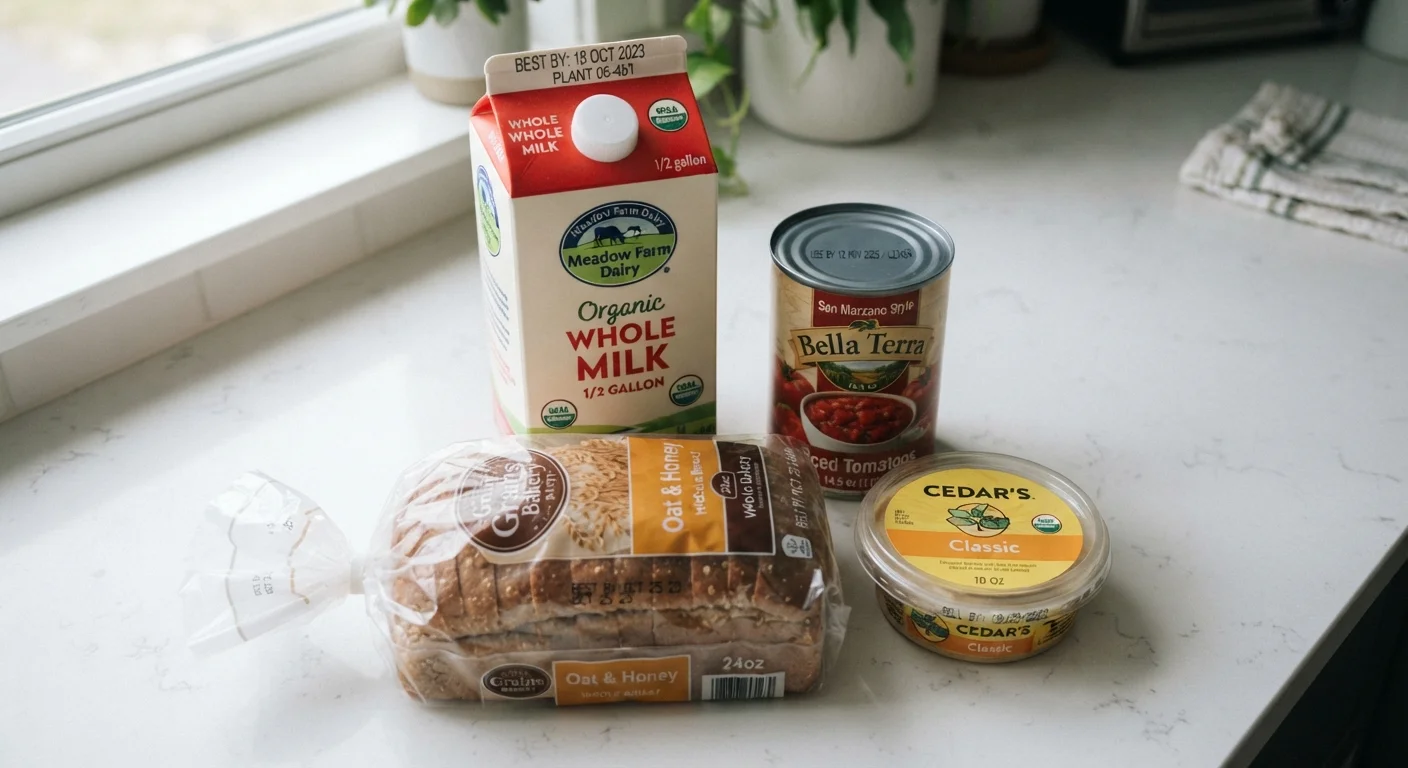
Photo credit: seeksmartgrowth.com
In this article
Confused by date labels on food packaging? Here is what each label actually means and how to avoid throwing away perfectly good food.
Key Takeaways
- Sell-by dates are instructions for retailers, not a signal that food has gone bad.
- Use-by dates are the closest thing to a safety cutoff, mainly on perishables like meat and dairy.
- Best before dates indicate peak quality, not a hard spoilage point.
- Most food is safe to eat for at least a short period after a printed date if stored correctly.
- Your senses, sight, smell, and texture, are often more reliable than a date stamp for many foods.
What each label actually means
Walk down any grocery aisle and you will find at least three different types of date labels on packages. They look official, but they do not all carry the same meaning.
Sell-by is a stocking instruction for store employees. It tells the retailer how long to display the product. By the time an item hits its sell-by date, it typically still has usable life left, sometimes several days to a week, depending on the product and how it has been stored. A gallon of milk with a sell-by date of Thursday is usually fine to drink on Saturday if it has stayed cold.
Best before (sometimes printed as "best by") is about quality, not safety. The manufacturer is saying that the product will taste or perform as intended up to that date. After it passes, flavor, texture, or potency may decline gradually, but the food does not suddenly become dangerous. A box of crackers a week past its best-before date will likely taste stale before it makes anyone sick.
Use-by is the most serious of the three. It appears on highly perishable items, such as packaged deli meats, soft cheeses, and some ready-to-eat meals. These products can harbor harmful bacteria if kept too long, and the use-by date is the manufacturer's estimate of when that risk becomes meaningful. This is the one date worth paying attention to closely.
A note on infant formula
Infant formula is the one exception where a date label carries federal legal weight in the United States. The FDA requires a use-by date on formula, and manufacturers state that nutrient content may not meet label guarantees after that date. For all other foods, date labels are voluntary manufacturer decisions.
Why American families throw away too much food
The confusion between these labels has real financial consequences. A significant portion of food waste in American households traces back to people discarding food that is still safe, simply because a date has passed.
The problem is compounded by the fact that no federal standard defines what "sell-by" or "best before" must mean on a label. Two manufacturers in the same category can use the same phrase to mean different things. The USDA and FDA have both encouraged the food industry to simplify labeling, and some large grocery retailers have adopted more consistent language, but uniform national rules do not yet exist for most products.
For a family trying to stretch a grocery budget, this ambiguity is costly. Throwing away a container of yogurt one day past its sell-by date, or a can of beans two months past its best-before date, wastes both food and money. Choosing produce with longer natural shelf lives is one way to reduce waste at the source.
30-40%
Share of U.S. food supply wasted
According to the USDA, roughly 30 to 40 percent of the U.S. food supply is wasted, with household-level disposal accounting for a significant share.
$1,500+
Estimated annual food waste cost per household
USDA estimates suggest the average American family of four discards the equivalent of hundreds of dollars in food each year, often due to confusion about date labels.
1 only
Federally mandated date label in the U.S.
Infant formula is the only food product in the United States required by federal law to carry a specific date label, according to the FDA.
How to use your senses alongside date labels
For most foods, physical inspection is a reliable check alongside any printed date. Before discarding something, run through a short mental checklist.
- Look at the surface: mold, sliminess, or unusual color changes are clear signals to discard.
- Smell the food: sourness in milk or a rancid odor in oils or nuts means the food has turned.
- Check texture: mushy vegetables, curdled sauces, or gummy bread are signs of breakdown.
Canned goods deserve a separate note. If the can is undamaged, not bulging, and not rusted through, the contents are very likely safe well past any printed date. Heat processing during canning destroys pathogens, and a properly sealed can is a self-contained environment. Quality may drop over years, but safety is rarely the issue with intact cans stored at room temperature.
Raw proteins, poultry, seafood, and ground meat, are where date labels and sensory checks both matter most. These foods carry higher bacterial risk, and the window between "fine" and "unsafe" is shorter. Store them cold, use them promptly, and do not rely on smell alone, since some harmful bacteria produce no noticeable odor.
Practical storage habits that extend food life
Correct storage often matters more than the printed date. A piece of fish kept at 38 degrees Fahrenheit stays safe longer than one sitting at 45 degrees, regardless of what the label says. A few habits make a consistent difference.
Keep refrigerator temperature at or below 40 degrees Fahrenheit and freezer temperature at 0 degrees. Store raw meats on the lowest shelf to prevent drips onto other foods. Transfer opened cans to sealed containers in the fridge, since the metal can affect flavor once exposed to air. Keep dry goods in airtight containers to slow moisture and pest exposure.
Freezing is one of the most underused tools for extending food life without sacrificing safety. Bread, cheese, cooked grains, and most proteins freeze well. If you know you will not use something before its use-by date, freezing it a day or two before that point is a straightforward way to preserve it.
Some vegetables naturally last far longer than others, which makes them worthwhile staples when reducing waste is a priority.
Frequently Asked Questions

Author
Food & Drink Editorial Team
Food & Drink Editorial Team is the collective byline for our editorial team and contributor network. Articles published under this byline or an editorial pen name are researched, written, and reviewed according to our editorial standards for clarity, consistency, and independence before publication.
View all articles →