
Batch Cooking vs. Daily Cooking: Which Saves More Time and Money?
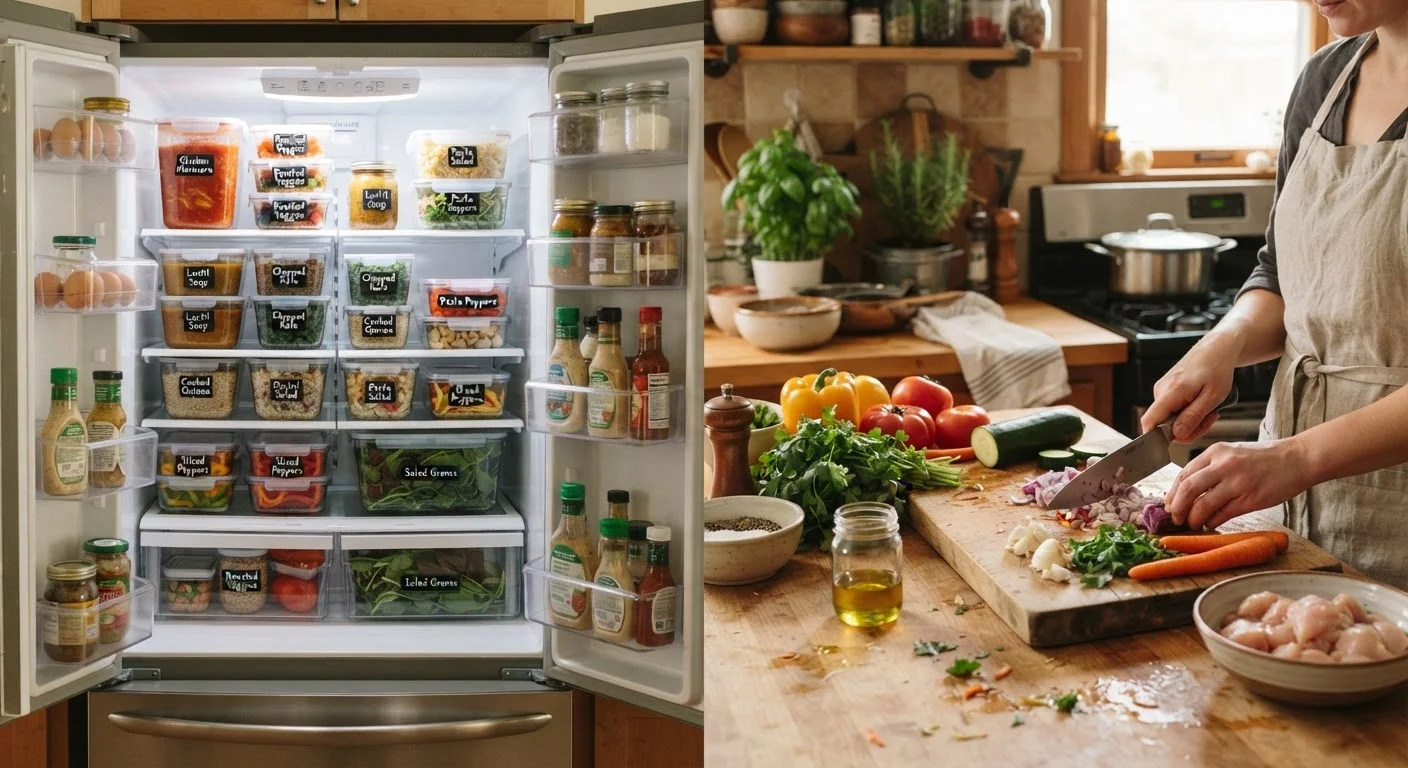
Photo credit: seeksmartgrowth.com
In this article
Compare batch cooking and daily cooking across cost, convenience, and nutrition to find the right rhythm for your household.
Key Takeaways
- Batch cooking typically costs less per serving because bulk buying lowers ingredient prices.
- Daily cooking produces less food waste when family schedules are unpredictable.
- Batch cooking requires a larger upfront time investment, usually two to three hours on one day.
- Daily cooking preserves more nutritional quality in some vegetables that degrade quickly after cooking.
- A hybrid approach, batch-prepping components rather than full meals, suits many families best.
- Food storage space and container availability affect whether batch cooking is practical at home.
What each approach actually looks like in practice
Batch cooking means setting aside a defined block of time, usually one session per week, to cook large quantities that get portioned and stored for later meals. A typical session might produce a pot of rice, a slow-cooked protein, roasted vegetables, and a sauce, all stored in the refrigerator or freezer.
Daily cooking means preparing meals from scratch each day, or at least each evening. Ingredients are bought closer to when they will be used, and meals are planned meal by meal rather than week by week.
Neither approach is a single fixed method. Many families land somewhere between: they plan meals for the week but still cook each night, or they batch only one component rather than entire dishes. Understanding the tradeoffs of each end of the spectrum helps you decide where your household fits.
Cost comparison: where each approach spends and saves
Batch cooking generally wins on grocery spending because buying larger quantities of staple ingredients, dried legumes, grains, whole chickens, or bulk spices, costs less per unit than buying smaller amounts repeatedly. A five-pound bag of dried lentils costs significantly less per serving than the same lentils bought in small cans across multiple trips.
It also reduces impulse purchases. One structured shopping trip based on a set plan limits exposure to unplanned buys. If you want to go deeper on grocery savings strategies, see our guide on stretching a grocery budget without sacrificing flavor.
Daily cooking can spend more overall because smaller, more frequent purchases often come at a higher per-unit cost. However, it can actually waste less food when a household's schedule is unpredictable. A batch-cooked meal that sits in the refrigerator past five days and gets thrown out is not a saving, it is a loss. Families with variable attendance at the dinner table sometimes find that daily cooking results in less food thrown away.
| Criterion | Batch cooking | Daily cooking |
|---|---|---|
| Grocery cost per meal | Lower, bulk buying helps | Higher per-unit cost typical |
| Weekly time investment | Lower total, front-loaded | Higher total, spread evenly |
| Food waste risk | Higher if schedules shift | Lower with flexible plans |
| Meal variety day-to-day | Lower without planning | Higher, full daily control |
| Food freshness and texture | Declines after 3 to 4 days | Best, eaten same day |
| Weeknight effort | Minimal, mostly reheating | Moderate to high each night |
| Upfront equipment needs | More storage containers | Standard cookware sufficient |
Families who want a middle-ground savings approach often batch-prep components rather than full meals, allowing flexibility while still capturing most of the bulk-buying advantage. Our article on the real cost of takeout vs. home cooking puts both approaches in further context against restaurant spending.
Time: the upfront cost vs. the daily cost
Batch cooking front-loads time. A well-organized session of two to three hours on a Sunday can cover four or five weeknight dinners. That math works in its favor when the alternative is 45 minutes of prep and cleanup every single evening. Over a week, the total active cooking time is usually lower with batch cooking.
The hidden time costs matter too. Washing, chopping, and storing large volumes of food takes longer than equivalent small-batch prep because you are working through more material at once. Counter space, the number of pots available, and storage container access all affect how efficiently a session runs.
Daily cooking distributes time more evenly. Some families find this less mentally taxing than a single long session. There is no planning fatigue from mapping out five days of meals in advance, and no pressure to finish a large cook before the groceries sit too long.
A well-stocked pantry reduces daily cooking time considerably. Our guide to stocking a pantry for easier weeknight dinners covers which staples give families the most flexibility per dollar spent.
A hybrid approach that many families use
Component batch cooking sits between the two methods. Instead of cooking complete dishes, you prep building blocks: a large pot of grains, a batch of roasted vegetables, a cooked protein. Each night, family members assemble different meals from those components. This preserves variety while cutting daily prep time and still taking advantage of bulk ingredient pricing.
Nutrition and food quality over time
Some nutrients in vegetables, particularly water-soluble vitamins like vitamin C and folate, degrade after cooking. Food that sits refrigerated for four days has lost a portion of those nutrients compared to food eaten immediately. For most families eating a varied diet, this difference is unlikely to be nutritionally significant, but it is a real factor.
Proteins like chicken thighs, beef chuck, or beans hold up well over several days and are practical batch-cooking choices. Cheaper cuts often work better in batch cooking anyway, since slow cooking improves their texture. See why cheap cuts of meat are often the most flavorful for guidance on which cuts reward longer cooking.
Leftovers from daily cooking can also be repurposed rather than eaten as-is, which preserves variety. Our piece on turning leftovers into a second meal covers practical approaches for making yesterday's dinner feel entirely different the next day.

Author
Food & Drink Editorial Team
Food & Drink Editorial Team is the collective byline for our editorial team and contributor network. Articles published under this byline or an editorial pen name are researched, written, and reviewed according to our editorial standards for clarity, consistency, and independence before publication.
View all articles →