
The Real Cost of Takeout vs. Home Cooking for a Family of Four
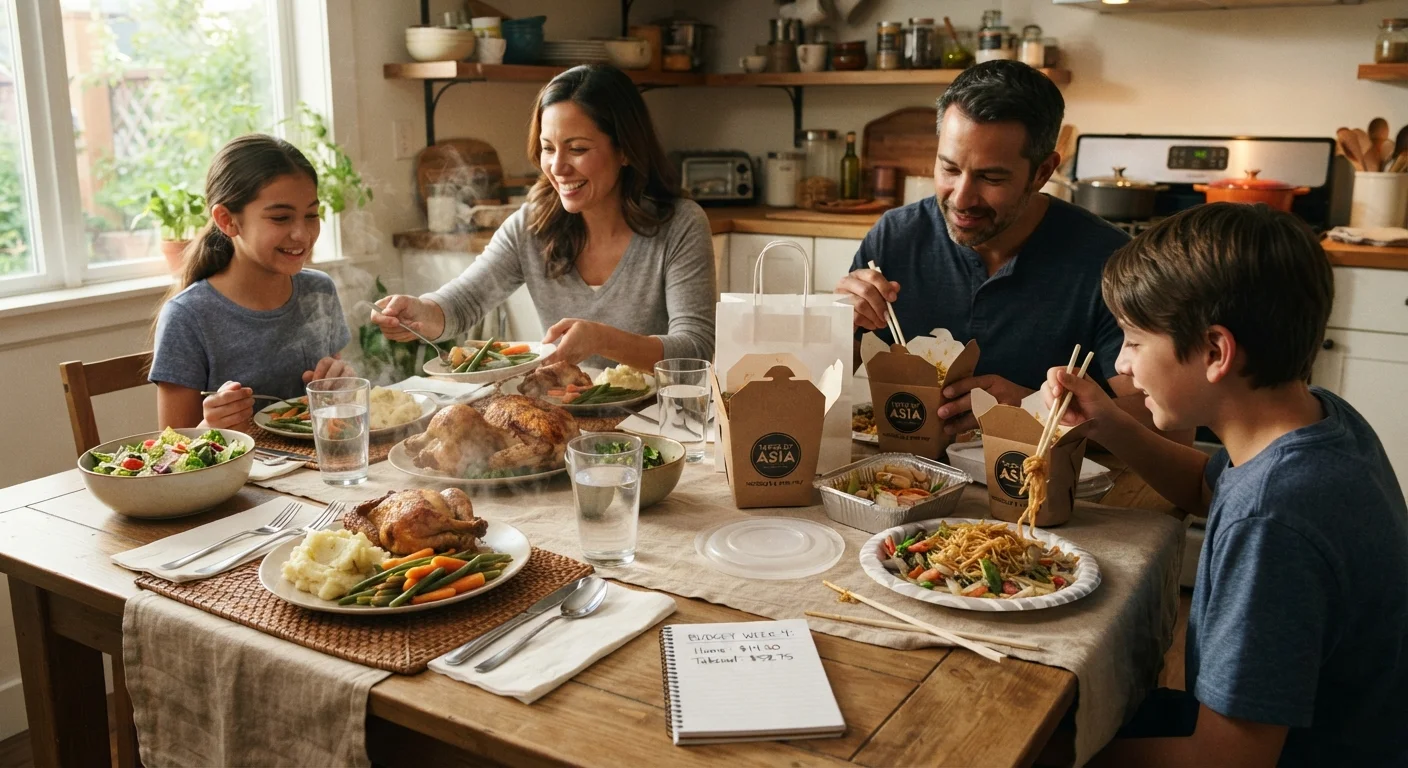
Photo credit: seeksmartgrowth.com
In this article
A straightforward breakdown of what families actually spend on takeout compared to preparing similar meals at home.
Key Takeaways
- A single takeout meal for a family of four typically costs two to four times more than a comparable home-cooked meal.
- Delivery fees, tips, and taxes can add 30 to 40 percent on top of the listed menu price.
- Home cooking costs vary by cuisine type, but most family dinners land between $8 and $18 total.
- Frequency matters more than any single meal: two takeout nights per week can add over $3,000 annually.
- Batch cooking and meal planning reduce the time gap between home cooking and ordering out.
What takeout actually costs a family of four
The menu price is only part of the bill. A typical fast-casual or sit-down takeout order for four people in the U.S. runs $40 to $65 before anything extra is added. Add a delivery fee ($3 to $8), a service fee charged by the app (often 10 to 15 percent of the subtotal), taxes, and a standard tip, and the same order lands at $55 to $90 or more.
Pizza, which many families consider an affordable takeout choice, illustrates this clearly. Two large pizzas with basic toppings might be listed at $28, but with a delivery fee, app markup, and a 20 percent tip, the total is often $42 to $48. That figure is for one meal.
Fast food is cheaper but not dramatically so when ordered for a family. A combination of burgers, fries, and drinks for four at a national chain typically runs $30 to $40, even without delivery. Picked up in person, that remains the lower end of the takeout range, though it still exceeds most comparable home-cooked meals.
| Takeout (delivered) | Takeout (pickup) | Home cooking | |
|---|---|---|---|
| Average cost per meal (family of 4) | $55 to $90 | $35 to $50 | $8 to $18 |
| Fees and add-ons | Delivery, service fee, tip, tax | Tax only | None beyond groceries |
| Typical wait or prep time | 30 to 60 minutes | 15 to 30 minutes drive | 20 to 45 minutes |
| Annual cost (twice weekly) | ~$5,720 to $9,360 | ~$3,640 to $5,200 | ~$832 to $1,872 |
| Flexibility for dietary needs | Limited to menu | Limited to menu | Full control |
| Leftovers potential | Sometimes | Sometimes | Often, especially planned |
What the same meal costs at home
Cooking a comparable meal at home for four people generally costs $8 to $18, depending on the protein and how much of the pantry is already stocked. A pasta dinner with ground beef, jarred sauce, and a simple salad runs about $8 to $12. Chicken tacos with tortillas, shredded cheese, salsa, and slaw land around $10 to $15. A stir-fry with rice, frozen vegetables, and chicken thighs sits in the same range.
These figures assume standard grocery-store pricing and no specialty items. Ingredient costs vary by region and season, but the ratio holds: home cooking for four is reliably two to four times less expensive than the equivalent takeout order, and often more than that when delivery fees are included.
One factor families sometimes overlook is the per-serving cost of pantry staples. Oil, spices, canned goods, and grains are purchased once and used across many meals, which spreads their cost in ways that don't show up in a single-meal comparison. This makes home cooking look even more favorable over a weekly or monthly view. For practical ways to stretch those grocery dollars further, see strategies for cutting grocery costs without sacrificing flavor.
How frequency shapes the annual difference
The gap between takeout and home cooking becomes most visible when frequency is calculated. A family ordering takeout twice a week at an average of $55 per order spends roughly $5,720 per year on those meals alone. If those same nights were home-cooked at $13 average per meal, the total would be about $1,352. The difference is approximately $4,368 annually from two nights per week.
Even one takeout order per week at $55 versus $13 at home generates a difference of around $2,184 over a year. These are estimates, not guarantees, and actual savings depend on what and where families order, their region, and current grocery prices. But the directional finding is consistent: the savings from cooking at home accumulate quickly at any regular frequency.
Families who find daily cooking difficult may benefit from comparing batch cooking and daily cooking to find a rhythm that reduces reliance on takeout without requiring a fresh meal every night.
Time costs and the convenience calculation
Takeout has real value when time is genuinely short. A 45-minute cooking window is not always available on weeknights, and that reality matters. However, the time cost of home cooking is often overstated relative to ordering.
Waiting for delivery commonly takes 30 to 60 minutes, sometimes longer. Simple home meals, including pasta, eggs and rice, or tacos, can be ready in 20 to 30 minutes with basic preparation. The time difference shrinks considerably when the comparison is an efficient weeknight dinner rather than an elaborate recipe.
Planning also reduces the time burden. Families who use a weekly meal plan spend less time deciding what to cook each night and less time making unplanned grocery runs. Getting started with meal planning is more accessible than many families expect, and it directly cuts down on nights when takeout becomes the default because nothing is ready.
Where takeout spending makes sense
This comparison is not an argument against takeout. There are situations where it is the practical choice: illness, travel recovery, a genuinely chaotic week, or a deliberate treat. The problem is not takeout itself but unplanned, habitual ordering that is driven by the absence of a backup plan rather than a real preference.
Pickup orders are meaningfully less expensive than delivery. Skipping the app and calling the restaurant directly, or driving to pick up the order, eliminates delivery fees, app service charges, and often produces a larger tip expectation. For a family spending $55 on a delivered order, the pickup equivalent is often $35 to $42 for the same food.
Families who want to evaluate related spending patterns across food and health choices may also find it useful to read about nutrition misconceptions that lead families to overspend.

Author
Food & Drink Editorial Team
Food & Drink Editorial Team is the collective byline for our editorial team and contributor network. Articles published under this byline or an editorial pen name are researched, written, and reviewed according to our editorial standards for clarity, consistency, and independence before publication.
View all articles →