
Decorating Mistakes That Make Rooms Feel Smaller Than They Are
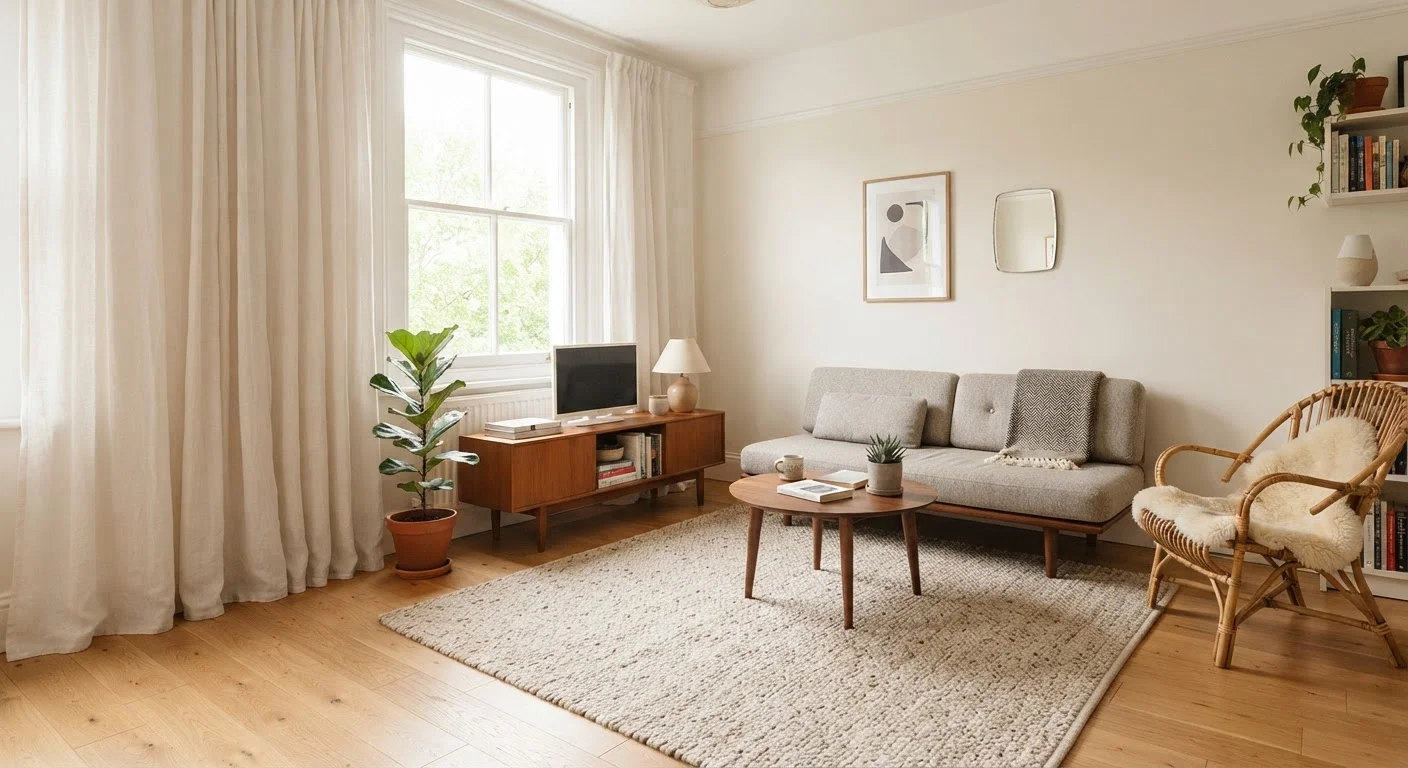
Photo credit: seeksmartgrowth.com
In this article
Common layout and styling errors that shrink a room visually, and straightforward ways to correct each one.
Key Takeaways
- Hanging curtains too low and narrow is one of the most common mistakes that shrinks a room visually.
- Oversized or undersized rugs throw off proportion and make a floor plan feel disjointed.
- Pushing all furniture against the walls usually makes a room feel smaller, not larger.
- Dark, busy walls can close in a space when used without a clear plan.
- Clutter at eye level draws the gaze down and reduces the perceived ceiling height.
Why small rooms so often look smaller than they have to
Square footage sets a limit on what a room can hold. Decorating choices determine how large that space actually feels. A room can be physically small yet feel open and comfortable, or it can be generously sized and feel cramped because of a few avoidable errors in layout and styling.
Most of the mistakes covered here are common precisely because the instinct behind each one makes sense. Hanging curtains at the window, picking a rug that fits the budget, lining furniture along the walls so people can walk through the middle: all of these feel practical. The problem is that visual scale does not follow the same logic as floor plans.
If you want a broader rethink of your space without spending anything, rearranging your existing furniture is often the fastest fix available.
Hanging curtains at window height instead of ceiling height.
Why it happens: Most people hang curtain rods just above the window frame because that is where the window is. It feels logical but visually cuts the wall in half.
Choosing a rug that is too small for the seating area.
Why it happens: Smaller rugs are less expensive, so budget-conscious shoppers often choose them to save money. The result is a rug that floats like an island, making the room feel fragmented.
Pushing every piece of furniture against the walls.
Why it happens: It seems like moving furniture away from the center would free up floor space. In practice, it creates a gap around the room's edge that reads as empty and awkward.
Using too many small decorative objects instead of a few larger ones.
Why it happens: Collecting small items is affordable and feels safe, since no single piece is a big commitment. Over time the surfaces become cluttered and the room feels busy and cramped.
Ignoring vertical space by keeping everything at the same height.
Why it happens: Most furniture sits at a standard height and wall art often gets hung at eye level, creating a visual band that stops well below the ceiling.
Blocking natural light with heavy window treatments or bulky furniture placed in front of windows.
Why it happens: Thick drapes feel cozy and furniture placement often follows available wall space rather than light sources.
Making corrections that actually hold
Most of the fixes above cost little or nothing. Rehang a curtain rod, pull the sofa forward, edit the clutter on a side table. The changes that do require spending, such as a larger rug or taller shelving, tend to pay off visually more than almost any other upgrade at the same price.
Avoid over-correcting with mirrors
Mirrors are widely recommended for making small rooms feel larger, and they can help when placed to reflect light or a pleasing view. However, a mirror that reflects clutter, a blank wall, or the back of a sofa makes the problem worse rather than better. Place mirrors deliberately, not reflexively.
Wall color is one area where small mistakes are easy to reverse but easy to misread. A dark wall does not automatically shrink a room. Used intentionally on a single accent wall, a deep color can add depth. The problem is dark color on all four walls without enough light to balance it. Neutral walls are not always the safe choice either, so it helps to understand what you are trying to achieve before committing to a palette.
For rooms where storage is part of the visual problem, choosing between open shelving and closed cabinets is worth thinking through carefully. Open shelves can make a room feel larger when styled well but more cluttered when they are not. Finally, secondhand and thrift finds can fill a room affordably, and certain pieces from thrift stores translate well into polished rooms without contributing to the small-object clutter problem described above.

Author
Home Decor Editorial Team
Home Decor Editorial Team is the collective byline for our editorial team and contributor network. Articles published under this byline or an editorial pen name are researched, written, and reviewed according to our editorial standards for clarity, consistency, and independence before publication.
View all articles →