
Open Shelving vs. Closed Cabinets: Which Works Better in Small Spaces?
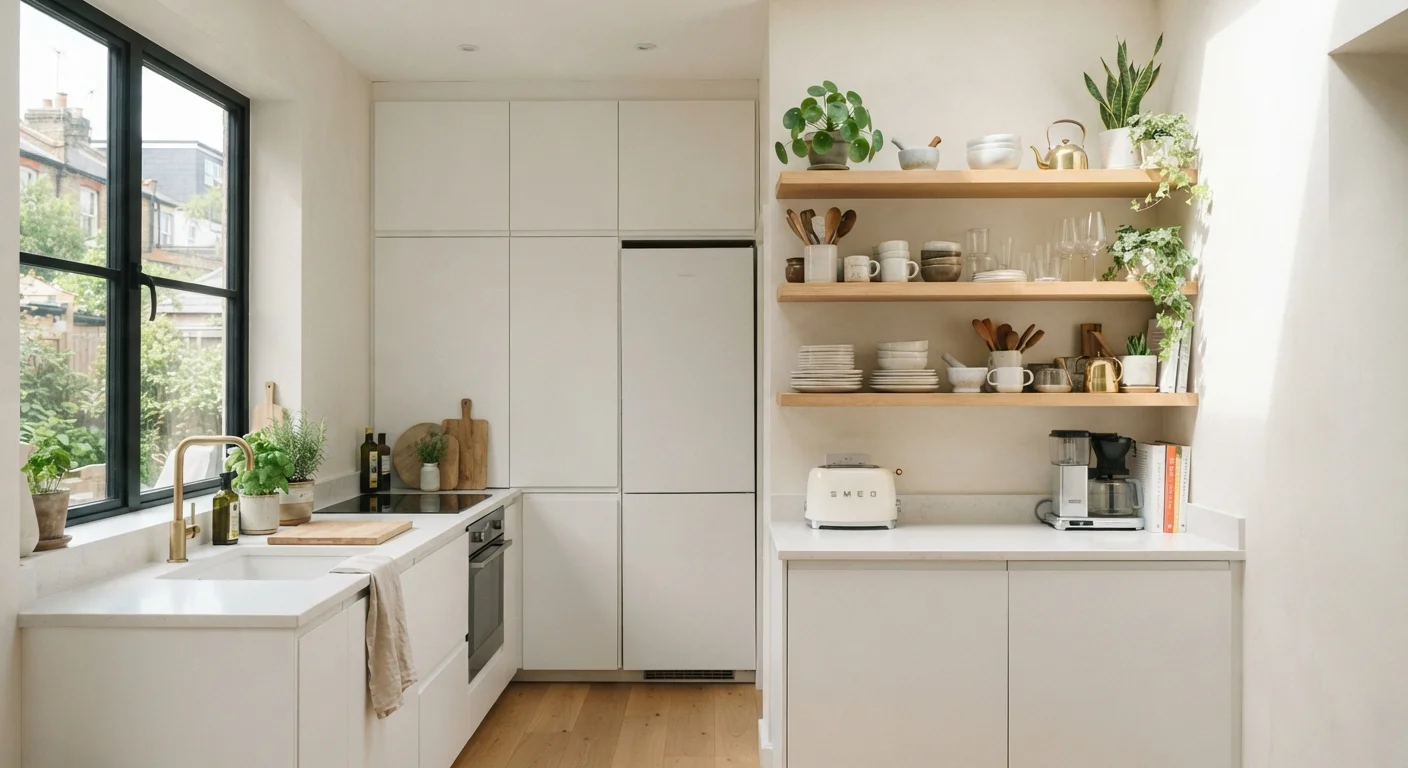
Photo credit: seeksmartgrowth.com
In this article
Weigh the practical and visual trade-offs between open shelves and closed storage to decide what fits your home.
Key Takeaways
- Open shelving can make a small room feel larger by drawing the eye upward and reducing visual bulk.
- Closed cabinets hide clutter instantly, which reduces the maintenance burden in busy households.
- Mixing both types in a single room often produces the most practical result for families.
- Dust accumulation on open shelves is a real ongoing cost in time, not just a styling concern.
- Cabinet depth matters as much as door style when maximizing storage in compact spaces.
What each storage type actually does in a small room
Open shelving removes the visual mass of a cabinet box. Without doors, the wall behind the shelf stays visible, which tricks the eye into reading the space as larger than it is. That effect is genuine, not just a styling myth. Interior designers consistently use floating shelves in narrow kitchens and small living rooms because the open negative space between objects on a shelf reads as breathing room.
Closed cabinets do the opposite: they consolidate clutter behind a flat plane. The trade-off is that a row of cabinet doors, particularly tall ones in a dark finish, can feel heavy and compress a room visually. However, a cabinet painted the same color as the wall behind it largely disappears, which is a practical workaround that costs only paint. See common decorating mistakes that shrink rooms visually for more context on how color and mass interact in tight spaces.
Both types can work in a small home. The decision turns on how you actually live in the room, not on which style is currently popular.
The real maintenance gap between open and closed storage
Dust settles on open shelves continuously. In a kitchen, cooking grease compounds the problem. A family that goes two or three weeks without wiping down open shelves will find a grimy film on dishes, cookbooks, and decorative objects. That is not a hypothetical: it is the most consistent complaint from households that switch to open shelving after seeing it in a magazine.
Closed cabinets shift maintenance inward. The interior collects crumbs, spills, and expired products rather than surface dust. Cabinet interiors are easier to ignore, which means the mess accumulates more slowly in plain sight, though it still requires periodic clearing.
For a family managing a full schedule, the honest question is which kind of cleaning fits their routine. If a quick wipe-down during meal prep is natural, open shelves work. If the available time for tidying is sporadic, closed doors are a more forgiving system.
| Criterion | Open shelving | Closed cabinets |
|---|---|---|
| Visual weight in small rooms | Low; walls stay visible | Higher; depends on color and depth |
| Dust and grease accumulation | Frequent; requires regular wiping | Interior only; less visible |
| Clutter management | Items must stay curated | Doors hide mess instantly |
| Accessibility | Everything visible and reachable | Requires opening doors |
| Child and pet safety | Lower; items are exposed | Higher with latches |
| Cost to install or convert | Low; door removal is inexpensive | Varies; new cabinetry can be costly |
| Styling effort | Ongoing; display must look intentional | Minimal; doors conceal arrangement |
Mixing both types: a practical approach for budget-minded families
Most small spaces benefit from a split arrangement. Reserve closed cabinets for everything that is visually noisy: cleaning supplies, mismatched containers, bulky appliances, and anything used infrequently. Use open shelves for a curated set of items that are genuinely attractive or needed daily.
In a small kitchen, this often means closed base cabinets with open upper shelves. The lower zone stays tidy with doors, and the upper zone stays airy and accessible. In a living room, a media cabinet with closed doors on the bottom and open shelves above follows the same logic.
This approach also limits the decorating pressure that comes with full open shelving. When only one zone is exposed, styling it well is manageable. Overcrowding a few shelves with mismatched items is one of the most common mistakes that make small rooms feel cramped.
For pantry areas specifically, a split between open and closed storage can also shape how efficiently a family shops and cooks. Our guide on stocking a pantry for easier weeknight dinners covers how pantry organization affects meal prep, which is directly relevant when deciding what to keep visible versus hidden.
Budget-minded families can convert existing cabinets to open shelving by removing doors and sanding the interior. That project requires no structural work and costs very little. The room-by-room decorating guide includes similar low-cost interventions for other rooms worth considering alongside storage changes.

Author
Home Decor Editorial Team
Home Decor Editorial Team is the collective byline for our editorial team and contributor network. Articles published under this byline or an editorial pen name are researched, written, and reviewed according to our editorial standards for clarity, consistency, and independence before publication.
View all articles →