
Stretching Routines the Whole Family Can Do Before Breakfast
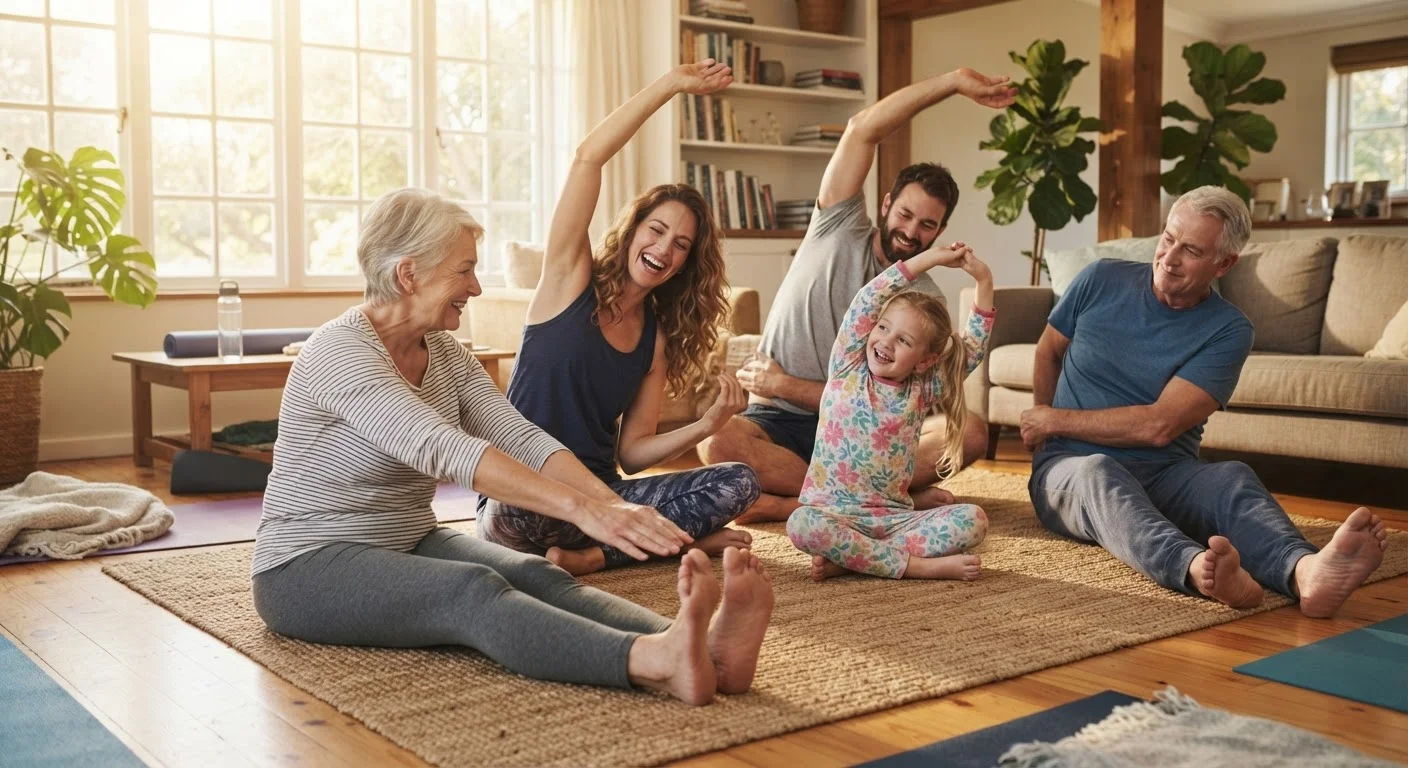
Photo credit: seeksmartgrowth.com
In this article
A practical morning stretching routine designed for mixed ages and fitness levels, requiring no equipment and only a few minutes.
Key Takeaways
- A short morning stretch routine requires no equipment and no gym membership.
- Every move in this routine can be adjusted for children, teens, and adults.
- Consistency over several weeks tends to improve flexibility and morning energy more than occasional intense sessions.
- Gentle static stretches held for 20 to 30 seconds are appropriate for a pre-activity morning warm-up.
- Children should never be pushed past a comfortable range of motion during stretches.
Why a morning stretch routine works for families
Morning stretching gives the body a gradual transition from sleep to activity. Muscles are cooler and joints stiffer after hours of rest, so gentle movement before breakfast can reduce that early-morning stiffness without requiring any warm-up gear or special space. For families, the appeal is practical: it costs nothing, takes less time than a television commercial break, and every age group can participate at the same moment.
Stretching regularly over weeks may improve flexibility and posture, though individual results vary and no outcome is guaranteed. What families tend to notice sooner is that the routine itself creates a predictable anchor to the morning, which can make the rest of the day feel more organized. For more on building sustainable habits around a busy schedule, see building a weekly wellness routine.
This is general wellness information, not medical advice. Anyone with an existing injury, chronic condition, or recent surgery should consult a qualified healthcare professional before starting any new physical routine.
What you will need
What you need before you start
The setup is minimal. Clear a space roughly the size of a yoga mat for each person. Hardwood or carpet both work; bare feet or socks are fine. Children six and under may need a caregiver beside them to demonstrate and spot balance-dependent poses.
Yoga mat or folded blanket
Provides cushioning for seated and lying stretches on hard floors.
Timer or phone clock
Helps each person hold stretches for the recommended duration without guessing.
Small pillow or rolled towel
Supports the neck or lower back for family members who need extra comfort during floor stretches.
If anyone in the family has a specific physical limitation, check with a doctor or physical therapist before joining in. This applies particularly to children with hypermobility, adults recovering from musculoskeletal injuries, and older family members with joint conditions.
The routine: step by step
Work through the steps below in order. Each hold is gentle and static, meaning the stretch is held in place rather than bounced. Bouncing a stretch, called ballistic stretching, raises injury risk and is not appropriate for this kind of routine. Aim for a mild pulling sensation, never sharp pain.
Neck rolls (seated or standing)
Sit or stand with a straight back. Slowly lower the right ear toward the right shoulder and hold for 20 seconds, then repeat on the left side. Finish with a gentle chin-to-chest drop held for 20 seconds. Keep the shoulders relaxed and away from the ears throughout.
For young children, demonstrate on yourself first. They tend to mirror rather than follow verbal instructions for this kind of movement.
Chest opener (standing)
Stand with feet hip-width apart. Clasp hands behind the lower back and gently straighten the arms while drawing the shoulder blades together. Lift the chin slightly and hold for 20 to 30 seconds. This counters the forward-hunched posture that develops from sleep and from sitting at desks or looking at screens.
Standing quad stretch (balance-assisted)
Stand near a wall or chair back for support. Bend one knee and hold the ankle gently behind you, keeping both knees together and standing tall. Hold 20 to 30 seconds, then switch sides. Avoid pulling the heel toward the lower back; the goal is a mild stretch along the front of the thigh.
Seated forward fold (floor)
Sit on the floor with legs extended straight ahead. Inhale to lengthen the spine, then exhale and reach both hands toward the shins, ankles, or feet, whichever is reachable without rounding the back sharply. Hold 20 to 30 seconds. Flexibility varies widely by age and individual, so there is no correct endpoint. Comfort and a mild hamstring pull are the only targets.
Child's pose (floor)
Kneel on the floor, sit back toward the heels, and reach both arms forward along the floor. Rest the forehead down and breathe slowly for 20 to 30 seconds. This position gently lengthens the lower back and the muscles along the sides of the torso. It is one of the easiest stretches for children because it feels natural and low to the ground.
Supine spinal twist (floor)
Lie on the back with both knees bent. Let both knees drop slowly to the right side while extending the left arm along the floor at shoulder height. Keep both shoulders flat if possible. Hold 20 to 30 seconds, then bring the knees back to center and repeat on the left side. This stretch releases tension in the lower back and outer hips.
When this routine becomes a habit, it pairs well with free outdoor activity later in the day to round out movement without added cost.
Keeping the routine going
The hardest part of any family wellness habit is the second week, not the first. Novelty carries most routines through day one; structure carries them past day ten. Attaching the stretch session to an existing anchor, such as right after the alarm sounds or while the coffee brews, removes the need to decide whether to do it each morning.
Children respond well when the routine stays consistent in length. If the family is short on time, drop to three or four stretches rather than skipping entirely. A shorter session preserves the habit even when the schedule tightens. Consistency over intensity is a principle that applies here directly: a five-minute stretch five mornings a week does more for long-term flexibility than a longer session done occasionally.
As the family grows more comfortable, some members may want to add bodyweight movements after stretching. Bodyweight training versus home equipment covers how to think about that next step without overspending.
This article is for informational purposes only and is not medical advice. Consult a qualified healthcare professional before starting any new exercise routine, especially for children, pregnant individuals, or anyone with a medical condition.

Author
Health & Fitness Editorial Team
Health & Fitness Editorial Team is the collective byline for our editorial team and contributor network. Articles published under this byline or an editorial pen name are researched, written, and reviewed according to our editorial standards for clarity, consistency, and independence before publication.
View all articles →