
Reading a Repair Estimate: What Those Line Items Actually Mean
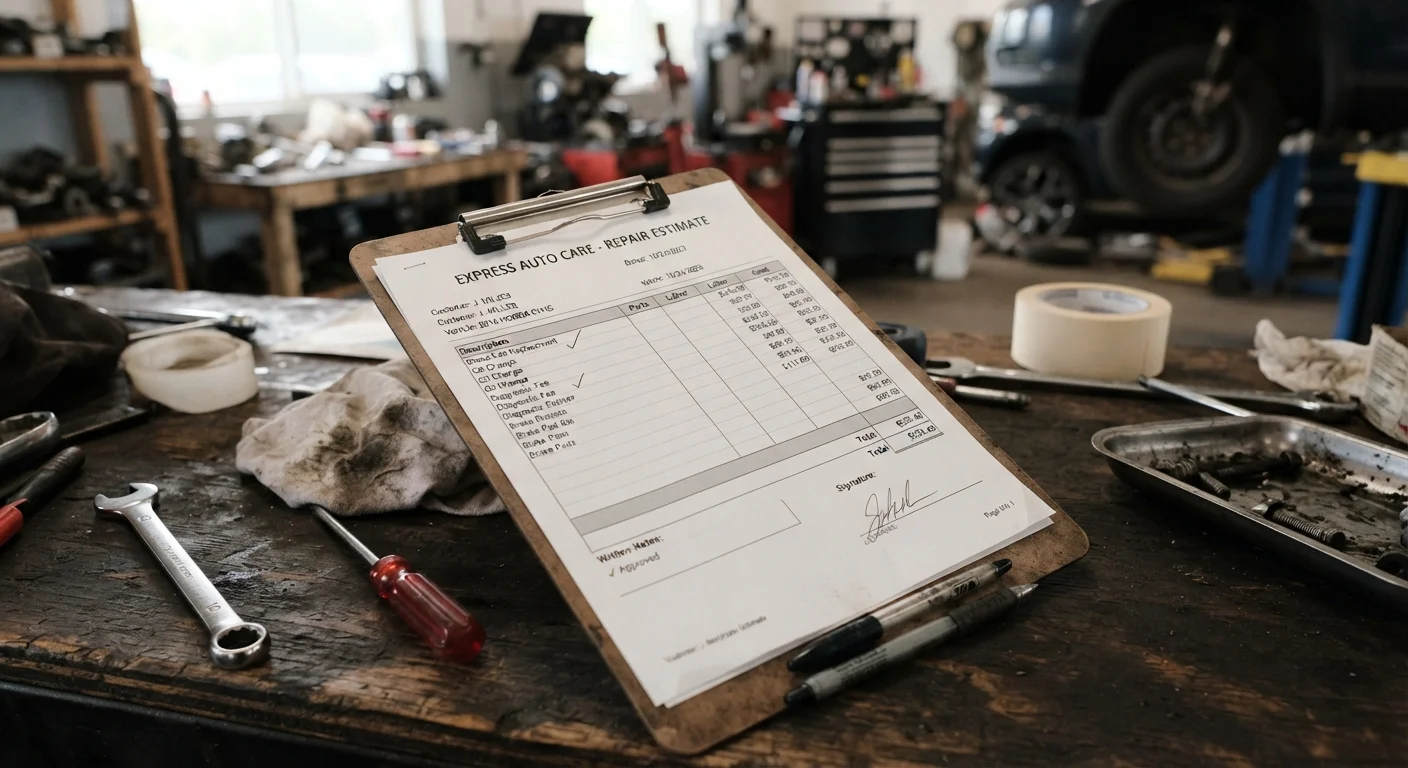
Photo credit: seeksmartgrowth.com
In this article
Labor hours, OEM vs. aftermarket parts, shop fees. Decode a mechanic's estimate so you can ask informed questions before approving work.
Key Takeaways
- Labor charges are based on flat-rate hours from industry guides, not the actual clock time a technician spends.
- Parts listed as OEM come from the original manufacturer; aftermarket parts vary widely in quality and price.
- Shop supply fees and environmental disposal fees are separate from parts and labor and are often negotiable.
- You can request an itemized written estimate before authorizing any work in every U.S. state.
- A higher labor rate at one shop can still produce a lower total bill if fewer hours are flagged.
- When a repair bill looks steep, comparing it against your vehicle's value is a practical next step.
How labor charges work
The labor section is usually the largest portion of any estimate. Shops set a labor rate, expressed as a dollar amount per hour, and then multiply that rate by the number of flat-rate hours assigned to your specific repair.
Flat-rate hours come from industry labor guides that assign a fixed time value to each job type on each vehicle. A brake pad replacement on a compact sedan might carry 1.5 flat-rate hours; the same job on a pickup truck with larger calipers might carry 2.2 hours. The technician gets paid based on those set figures, not on how long the repair actually takes on the day.
This means a shop with a higher hourly labor rate is not automatically more expensive. If one shop flags 2.0 hours for a job and another flags 3.0 hours for the same work, the shop with the higher rate can still come out cheaper. Always compare estimated hours alongside the hourly rate, not just the final labor subtotal.
Ask for the labor time before approving
Before you authorize a repair, ask the service writer how many flat-rate hours are assigned to the job and what the shop's hourly labor rate is. This lets you calculate the labor subtotal yourself and catch any arithmetic errors or unexpected additions before the work begins.
Parts: OEM, aftermarket, and remanufactured
Parts lines on an estimate will usually identify whether each component is OEM, aftermarket, or remanufactured. OEM stands for Original Equipment Manufacturer: the part meets the same specification as what came on your vehicle from the factory. Aftermarket parts are produced by third-party manufacturers and vary considerably in quality and price. Remanufactured (or rebuilt) parts are used components that have been disassembled, inspected, and rebuilt to a defined standard, common for alternators, starters, and brake calipers.
Aftermarket parts are not inherently inferior. Many meet or exceed OEM specs. The concern is consistency: the category includes both well-engineered components and low-cost ones that wear out faster. Ask the shop which specific brand they plan to use and whether it includes a parts warranty. A written warranty on parts is a reasonable expectation for any significant repair.
If your vehicle is still under a manufacturer's powertrain or bumper-to-bumper warranty, using non-OEM parts can sometimes affect warranty coverage on related systems. Confirm with your dealership before authorizing aftermarket parts on a vehicle still under warranty.
~$75-$175
Typical U.S. shop labor rate range per hour
Labor rates vary by region, shop type, and specialization; dealership rates generally run at the higher end of this range.
30-50%
Parts markup typical at many repair shops
Shops commonly mark up parts over their wholesale cost; the percentage varies by shop policy and part type.
Shop fees and environmental charges
Below the parts and labor subtotals, most estimates include one or more additional fee lines. Common ones are shop supply fees, hazardous waste disposal fees, and sometimes a separate inspection or diagnostic fee.
Shop supply fees cover items consumed during the repair: rags, cleaning chemicals, small hardware, and similar consumables. Some shops charge a flat dollar amount; others apply a percentage of the total labor charge. Neither approach is regulated at the federal level, so the amount varies. Ask how the fee is calculated if it seems high relative to the work performed.
Hazardous waste or environmental fees cover the cost of properly disposing of fluids, filters, and other regulated materials. This is a legitimate cost of responsible shop operation, though the dollar amount can differ significantly between shops.
A diagnostic fee, sometimes called a labor-to-diagnose charge, covers the technician's time to identify the problem before any repair begins. Many shops apply this fee toward the total bill if you authorize the repair. Confirm that policy in writing before agreeing to the diagnosis.
Reading the estimate before you sign
Every U.S. state gives consumers the right to a written estimate before a repair shop begins work above a set dollar threshold (the threshold varies by state). Request an itemized written estimate as a matter of routine, even for smaller jobs.
When reviewing it, check that each line item describes a specific task or part, not vague language like 'miscellaneous repairs.' Confirm that the part numbers or descriptions match the components you discussed. If the estimate lists a sublet charge, that means the shop is sending part of the work to another facility; ask which facility and why.
Comparing estimates from two shops line by line, not just total to total, is one of the clearest ways to identify whether you are being billed fairly. Dealership service centers and independent mechanics price labor and parts differently, and that context matters when comparing figures.
If the estimate total feels steep relative to your vehicle's value, working through the repair-versus-replace question is a practical next step before you authorize the work. On the other hand, deferring a repair that looks expensive now can result in higher costs later when related components fail.
Frequently Asked Questions

Author
Automobile Editorial Team
Automobile Editorial Team is the collective byline for our editorial team and contributor network. Articles published under this byline or an editorial pen name are researched, written, and reviewed according to our editorial standards for clarity, consistency, and independence before publication.
View all articles →