
Repairing vs. Replacing an Aging Vehicle: How to Think Through the Decision
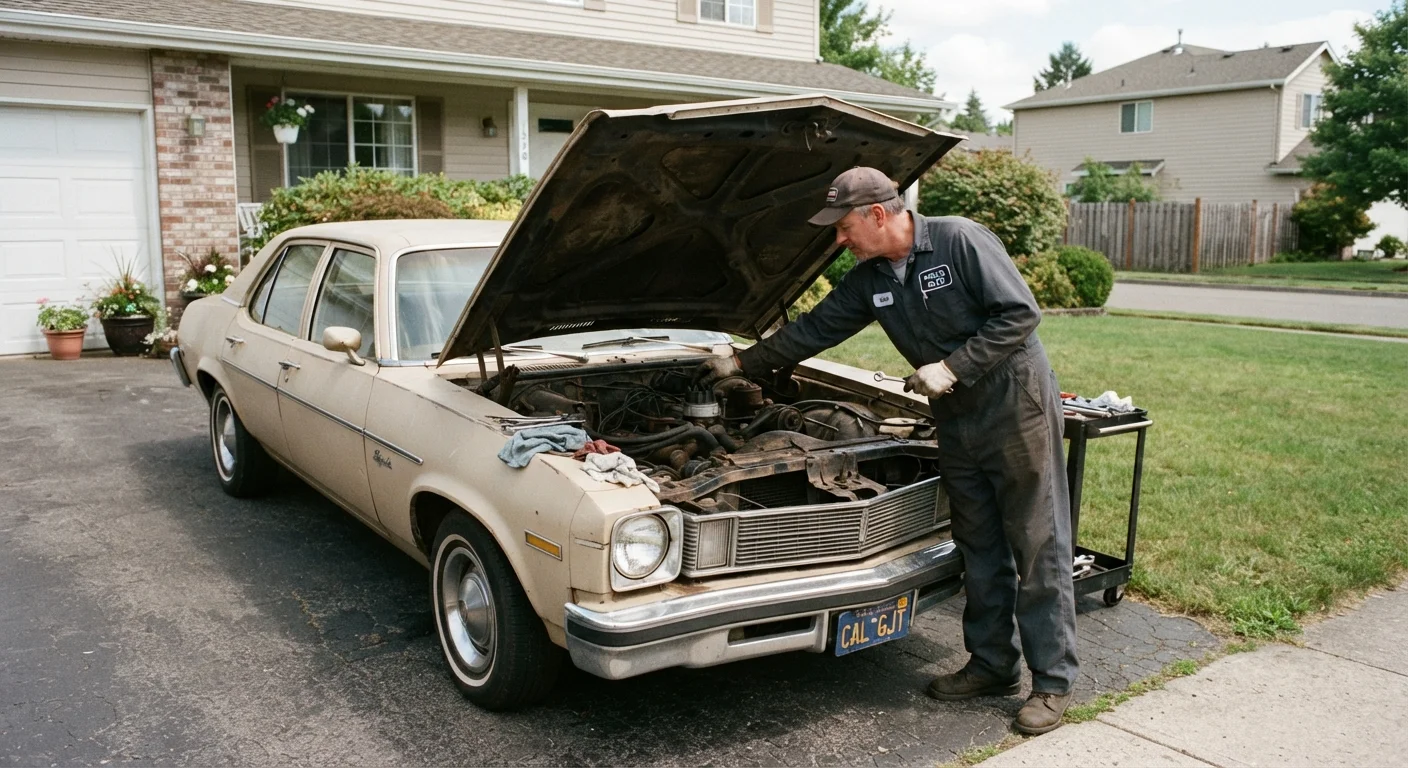
Photo credit: seeksmartgrowth.com
In this article
When a repair estimate feels steep, is it smarter to fix the car or move on? Walk through the key financial and practical factors to weigh.
Key Takeaways
- Compare total repair cost against the vehicle's current market value before deciding.
- Factor in monthly loan payments and higher insurance costs when pricing a replacement.
- Reliability history and safety equipment gaps can outweigh a favorable repair-to-value ratio.
- Deferred maintenance compounds costs: small skipped repairs often lead to larger failures.
- Getting a second repair estimate is standard practice and can change the math significantly.
Lower immediate cash outlay than financing a replacement
Even a significant repair bill is typically a one-time expense, while a replacement vehicle adds monthly payments for three to six years. On a paid-off car, that difference is substantial.
No new debt or higher insurance obligation
Lenders on auto loans require comprehensive and collision coverage, which costs more than liability-only insurance. Keeping the current car avoids that mandatory upgrade.
Known maintenance history works in your favor
A car you have owned and serviced consistently has a documented record. A used replacement carries unknown wear patterns regardless of what a vehicle history report shows.
Repair may restore several more years of reliable use
A targeted fix on an otherwise sound vehicle can return it to dependable service. Many mechanically simple older cars run reliably well past 150,000 miles with proper upkeep.
Repair may not address all underlying wear
Fixing one system does not reset the age of surrounding components. A major repair on a high-mileage vehicle can be followed by additional failures in the months after.
Older vehicles may lack current safety technology
Features like forward-collision warning, lane-keep assist, and updated airbag systems are absent from many older models. That gap has real consequences in a serious crash.
Fuel economy may be significantly worse than newer options
Older engines and transmissions often return lower miles-per-gallon figures than current equivalents. For drivers who cover significant annual mileage, that gap affects total ownership cost.
Repair costs are unpredictable by nature
Unlike a fixed monthly payment, repair expenses do not follow a schedule. A second major repair arriving within the same year can quickly overturn the financial case for keeping the vehicle.
The repair-or-replace question in plain terms
A repair estimate lands on your phone and the number looks wrong. Before any decision gets made, it helps to separate the emotional reaction from the actual financial picture. The question is not whether the car is old; it is whether keeping it running costs less than moving on, once all the real numbers are counted.
Two calculations anchor the decision. First, what is the vehicle worth in its current condition? Used-car valuation tools published by organizations like Kelley Blue Book or NADA Guides give a reasonable market range. Second, what does the repair cost as a percentage of that value? A widely used rule of thumb treats any repair exceeding roughly 50 percent of market value as a signal to reconsider, though that threshold is not absolute. A car with low mileage, a clean history, and no other pending work can justify crossing it. A car with multiple systems approaching failure probably cannot.
Before approving any major work, read the estimate carefully so you understand what labor hours, parts choices, and shop fees are actually driving the total.
What repairs actually cost you
The invoice price is the obvious number, but it is not the only cost of repairing. Consider how long the car will be out of service and whether a rental or alternative transportation adds to the bill. Ask the mechanic directly whether completing this repair is likely to surface other deferred work in the near term. A transmission rebuild on a car with a cracked radiator and worn suspension bushings means the transmission bill is only the first installment.
Deferred maintenance compounds quietly: a repair avoided today often costs more when the underlying problem worsens and damages adjacent components. That context matters when evaluating whether the current estimate reflects a genuine one-time event or the start of a cycle.
Getting a second opinion is reasonable for any estimate above a few hundred dollars. Shop rates, parts sourcing, and diagnostic conclusions can vary. Dealerships and independent shops have different cost structures, and knowing which type gave you the estimate affects how you should interpret it.
$9,282
Average annual new vehicle ownership cost
AAA's annual 'Your Driving Costs' study has consistently placed total new vehicle ownership costs above $9,000 per year when depreciation, financing, insurance, and fuel are combined.
~50%
Repair-to-value threshold worth noting
Consumer finance guides commonly suggest reconsidering a repair when the estimate approaches or exceeds half the vehicle's current market value, though individual circumstances vary.
What replacement actually costs you
A new or newer vehicle rarely costs only the monthly payment. Financing a replacement adds interest over the loan term. Full-coverage insurance, typically required by lenders, costs more than the liability-only coverage many owners carry on a paid-off older car. Registration fees are generally higher for newer model years in most states. Those recurring costs can easily total several hundred dollars a month beyond the payment itself.
If the current car is paid off and the repair is a one-time fix, the comparison is not between a repair bill and nothing. It is between a repair bill and years of loan payments, higher insurance, and higher registration fees. Laid out over 36 or 48 months, the arithmetic frequently favors the repair.
That changes if the replacement vehicle would provide safety features the older car lacks, such as automatic emergency braking or updated side-curtain airbags. Safety gaps are a legitimate factor in the decision, not just a talking point.
Pros and cons at a glance
Repairing an aging vehicle carries clear financial advantages alongside real practical risks. Replacement brings reliability and modern features at a cost that adds up faster than the sticker price suggests.
Lower immediate cash outlay than financing a replacement
Even a significant repair bill is typically a one-time expense, while a replacement vehicle adds monthly payments for three to six years. On a paid-off car, that difference is substantial.
No new debt or higher insurance obligation
Lenders on auto loans require comprehensive and collision coverage, which costs more than liability-only insurance. Keeping the current car avoids that mandatory upgrade.
Known maintenance history works in your favor
A car you have owned and serviced consistently has a documented record. A used replacement carries unknown wear patterns regardless of what a vehicle history report shows.
Repair may restore several more years of reliable use
A targeted fix on an otherwise sound vehicle can return it to dependable service. Many mechanically simple older cars run reliably well past 150,000 miles with proper upkeep.
Repair may not address all underlying wear
Fixing one system does not reset the age of surrounding components. A major repair on a high-mileage vehicle can be followed by additional failures in the months after.
Older vehicles may lack current safety technology
Features like forward-collision warning, lane-keep assist, and updated airbag systems are absent from many older models. That gap has real consequences in a serious crash.
Fuel economy may be significantly worse than newer options
Older engines and transmissions often return lower miles-per-gallon figures than current equivalents. For drivers who cover significant annual mileage, that gap affects total ownership cost.
Repair costs are unpredictable by nature
Unlike a fixed monthly payment, repair expenses do not follow a schedule. A second major repair arriving within the same year can quickly overturn the financial case for keeping the vehicle.
Making the call with incomplete information
Perfect information is rarely available. A mechanic can tell you what is broken today, not what will break next year. A used-car market value is a range, not a guarantee. Work with what is verifiable: the written estimate, the vehicle history report, the current market valuation, and your own records of past repairs.
One practical test: if you would not buy this specific car at its current market value knowing its condition and history, that is worth weighing. Conversely, if the car has been reliable, is mechanically sound outside the current problem, and the repair addresses a known, contained issue, staying with it is a defensible financial choice.
For drivers who decide to repair and hold on, maintaining a high-mileage vehicle with consistent habits can extend its useful life considerably and reduce the odds of the next big bill arriving soon.

Author
Automobile Editorial Team
Automobile Editorial Team is the collective byline for our editorial team and contributor network. Articles published under this byline or an editorial pen name are researched, written, and reviewed according to our editorial standards for clarity, consistency, and independence before publication.
View all articles →