
Why Skipping Small Repairs Often Costs More in the Long Run
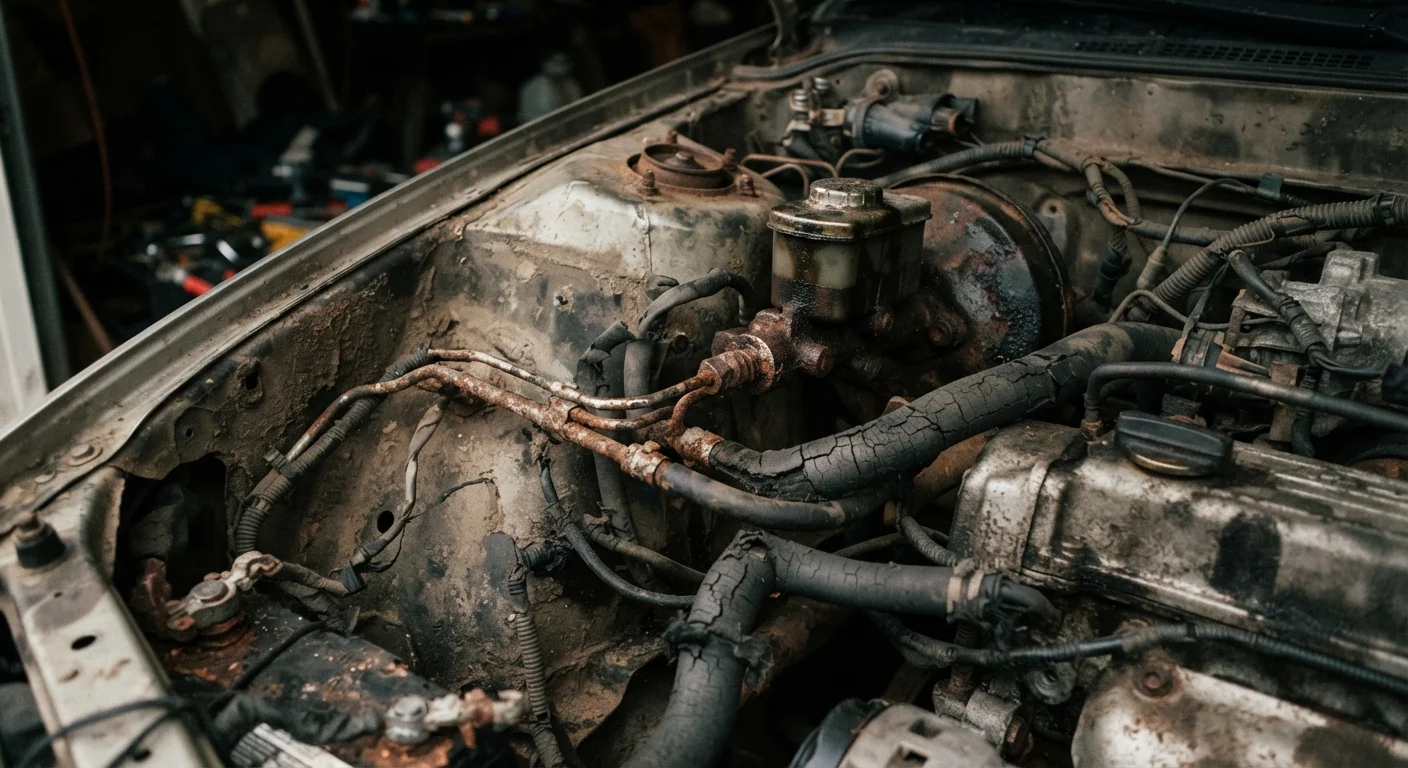
Photo credit: seeksmartgrowth.com
In this article
A loose heat shield or worn wiper blade seems minor. See how deferred maintenance quietly compounds into far larger repair bills.
Key Takeaways
- Minor repairs deferred today routinely trigger costlier failures in connected systems.
- Worn brake pads, low coolant, and slow leaks each follow a predictable pattern of escalation.
- A basic inspection schedule catches most cascade failures before they reach expensive territory.
- Understanding repair estimates helps you prioritize which items genuinely cannot wait.
How small problems compound into large bills
A brake pad replacement that costs around $150 to $250 per axle becomes a rotor replacement job when the pad wears to metal. Add caliper damage and the bill can reach $600 to $900 or more, for a problem that started as a squeal. That pattern repeats across almost every vehicle system: a cheap fix ignored long enough becomes an expensive one.
The math works against deferral in another way too. Labor is a fixed cost per job. When a mechanic is already deep inside a suspension or replacing a timing component, adding a related repair at the same visit costs far less than scheduling it separately later. Choosing to skip that adjacent item today often means paying a full additional labor charge for the same access next time.
For families managing tight budgets, the instinct to delay a repair until payday makes sense in isolation. The problem is that most automotive systems are interdependent. Engine damage from delayed maintenance follows a similar logic: routine skips rarely stay contained to one component.
Common mistakes that push small costs into large ones
Ignoring brake wear indicators until the grinding starts.
Why it happens: Brake noise is easy to rationalize as a one-time sound, and drivers often wait to see if it returns before scheduling service.
Topping off a slow coolant leak instead of fixing its source.
Why it happens: A bottle of coolant is a few dollars and takes two minutes. A repair estimate for a leaking hose or water pump feels large by comparison, so the top-off becomes routine.
Deferring a check-engine light that has been on for weeks.
Why it happens: When the car still drives normally, a steady check-engine light feels like a warning that can wait. Many drivers assume it is an emissions sensor and nothing serious.
Skipping a tire rotation until a tire is visibly worn unevenly.
Why it happens: Rotation is easy to skip when it is not included in a service visit, and uneven wear is gradual enough that it is hard to notice day to day.
Leaving a known oil leak unaddressed between oil changes.
Why it happens: If the oil level stays within an acceptable range at each check, the leak can feel like a managed situation rather than an active problem.
Once you recognize these patterns, the next step is reading whatever a shop hands you with more confidence. A repair estimate's line items can tell you which items are safety-critical, which are cosmetic, and which are the kind of cascade-risk deferred repairs described above.
Building a simple catch-it-early habit
$1,200+
Average cost of a single unplanned breakdown repair
AAA has estimated that unplanned vehicle repairs cost American drivers over $1,200 on average per incident, compared to far lower costs for preventive maintenance.
35%
Vehicles on the road with at least one needed repair
Car Care Council surveys have consistently found that roughly one-third of vehicles inspected at care events have at least one maintenance or repair item that should be addressed.
The most reliable way to stay ahead of cascade costs is a short monthly walk-around: tires, lights, fluid levels under the hood, and a listen during the first minute of driving. None of that requires tools or mechanical knowledge. It just requires consistency.
When something does appear, categorizing it helps. Safety items such as brake wear, tire damage, or a cracked windshield in the driver's line of sight have no reasonable deferral window. Reliability items such as a slow coolant leak or a misfiring cylinder should be scheduled within a few weeks. Comfort or cosmetic issues such as a rattle in the door panel or a non-functional rear window defroster can wait for the right budget moment without compounding risk.
If your vehicle is already carrying miles, the stakes on each deferred item go up. High-mileage vehicle longevity depends heavily on catching wear before it reaches adjacent parts. And when a repair estimate does feel steep, the decision between fixing and moving on involves more than just the invoice. Weighing repair against replacement is a separate calculation worth working through carefully.

Author
Automobile Editorial Team
Automobile Editorial Team is the collective byline for our editorial team and contributor network. Articles published under this byline or an editorial pen name are researched, written, and reviewed according to our editorial standards for clarity, consistency, and independence before publication.
View all articles →