
What Happens Inside Your Engine When Maintenance Gets Delayed
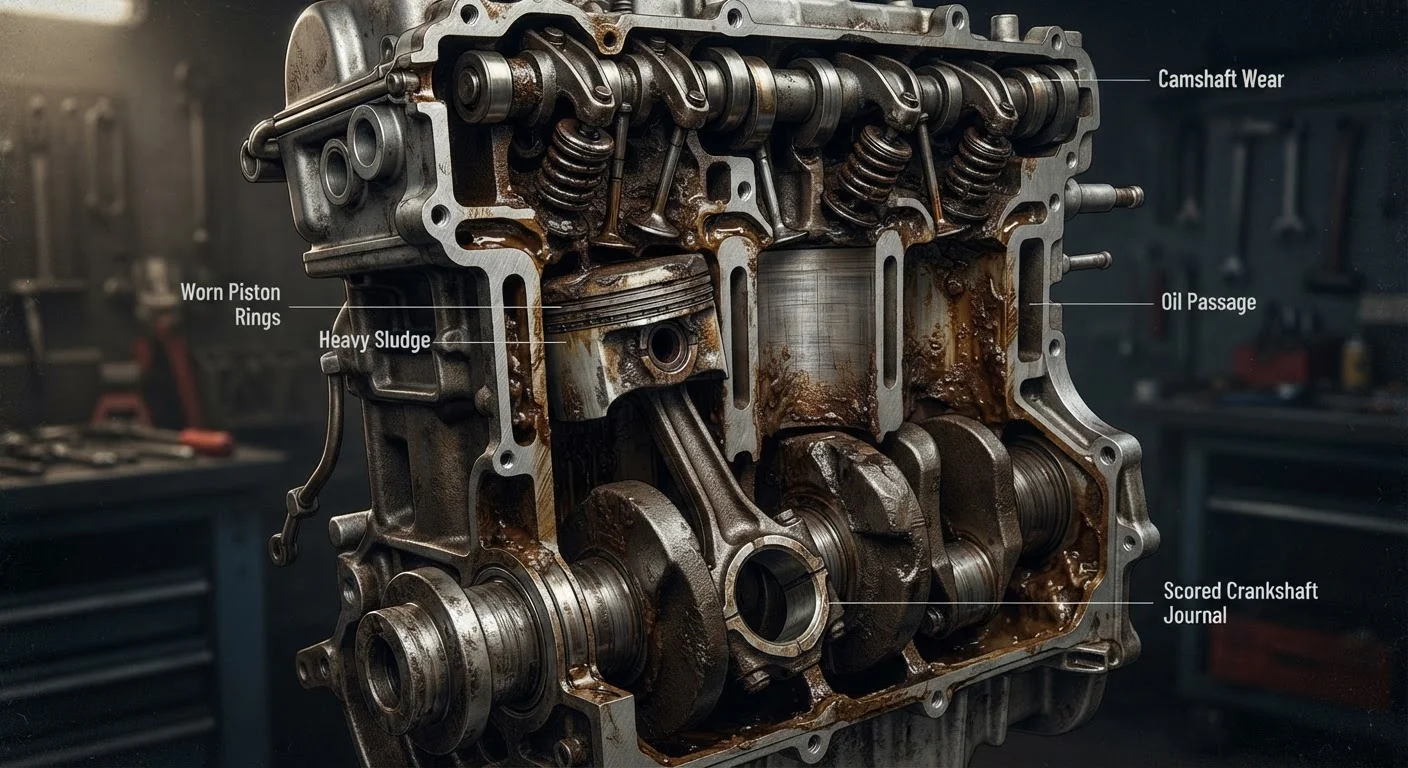
Photo credit: seeksmartgrowth.com
In this article
Learn how skipping routine maintenance affects your engine over time and which delays carry the greatest mechanical risk.
Key Takeaways
- Old engine oil loses its protective film and lets metal surfaces grind against each other.
- A blocked oil passage can starve critical engine components within seconds of startup.
- Coolant neglect is one of the most common causes of warped cylinder heads and blown gaskets.
- Most severe engine damage from deferred maintenance builds gradually and shows no warning light.
- Catching a problem at the maintenance stage is almost always cheaper than catching it at the repair stage.
What engine oil actually does, and what happens when it degrades
Engine oil does two jobs simultaneously: it lubricates metal surfaces that move against each other at high speed, and it carries heat and microscopic debris away from those surfaces. Fresh oil is thin enough to reach tight clearances quickly and thick enough to maintain a protective film under pressure.
As oil ages, heat and combustion gases break down its base molecules. Additives that neutralize acids and prevent foam get used up. What remains is thicker, more acidic, and less able to flow into narrow oil passages. At that point, metal parts that depend on a continuous oil film begin to contact each other directly, producing fine metallic particles that then circulate through the engine and cause further abrasion.
The damage is not dramatic at first. A single delayed oil change on a well-maintained engine rarely causes immediate failure. The problem is that each subsequent mile on degraded oil removes a fraction of material from bearing surfaces, cylinder walls, and camshaft lobes. Those fractions accumulate. By the time a bearing begins to knock audibly, the surface underneath has already lost significant material that cannot be restored without machining or part replacement.
Keep a simple maintenance log
A handwritten notebook in the glove box or a free phone app is enough to track service dates and mileage. Having this record also helps a mechanic spot patterns quickly, and it supports your case if a warranty claim is ever disputed. Dated receipts serve the same purpose if you use a shop.
Oil sludge: the slow-building threat
When oxidized oil mixes with water vapor from combustion and sits at high temperature, it forms a gel-like residue called sludge. This material accumulates in the lowest-flow areas of the engine first: valve covers, oil pan corners, and the passages feeding the variable valve timing (VVT) system on many modern engines.
A partially blocked VVT oil passage can trigger rough idle, reduced power, and error codes before any deeper damage appears. A fully blocked passage to a main bearing journal is more serious. Oil starvation at a bearing can destroy the bearing surface and score the crankshaft within a few minutes of engine operation. That failure typically means a complete engine rebuild or replacement.
Sludge removal is possible with professional chemical flushes, but the outcome depends heavily on how much material has already accumulated. Drivers who stay close to recommended oil change intervals rarely develop significant sludge. The condition is most common in vehicles that have gone tens of thousands of miles beyond service due dates, particularly those used on short urban trips where the engine never fully warms up.
For context on how these smaller neglected items compound over time, see how deferred maintenance quietly builds larger repair bills.
$4,000+
Typical engine rebuild cost from oil neglect
Industry repair data suggests a partial engine rebuild involving bearings, seals, and machining frequently exceeds this figure at independent shops, compared to well under $100 for several years of oil changes.
30%
Fuel economy drop from a severely clogged air filter
The U.S. Department of Energy has noted that a clogged air filter can reduce fuel economy measurably on older carbureted vehicles, and restricts performance on modern fuel-injected engines.
Cooling system neglect and what it does to the cylinder head
Coolant contains corrosion inhibitors that protect the aluminum and steel surfaces inside the engine's water jackets and radiator. Those inhibitors deplete over time. Old coolant becomes acidic, which pits aluminum surfaces and causes rust in iron components. Electrolytic corrosion, where small electrical currents pass through degraded coolant, accelerates this damage further.
A more immediate risk comes from coolant that has dropped below the minimum level through a slow leak that was never addressed. An engine running low on coolant runs hotter than its design tolerances allow. Aluminum cylinder heads expand at a different rate than the iron block beneath them when overheated. The head gasket, which seals combustion pressure and separates oil from coolant passages, can fail under that stress. A blown head gasket repair typically costs more than a year's worth of routine coolant service and oil changes combined.
Overheating can also warp the cylinder head itself, requiring machining or replacement. At that point, the repair estimate often prompts the question of whether to fix the car or move on. The repair versus replacement decision guide covers how to think through that calculation.
Air and fuel filters, and the less obvious chain of effects
A clogged air filter restricts the volume of air reaching the combustion chamber. The engine management system compensates by adjusting fuel delivery, but a severely restricted filter forces the engine to work harder for the same power output. Fuel economy drops, and in some cases the engine runs rich (too much fuel relative to air), which washes oil from cylinder walls and increases wear on piston rings.
A clogged fuel filter creates uneven fuel pressure. Fuel injectors that operate outside their designed pressure range spray inconsistent droplet patterns, leading to incomplete combustion and carbon deposits on intake valves. On direct-injection engines, which do not benefit from fuel washing the back of intake valves, carbon buildup can reduce airflow enough to require a walnut-blasting service, an induction cleaning procedure that typically costs several hundred dollars.
Staying current on filter replacements is one of the lower-cost maintenance items relative to what it protects. Drivers managing older vehicles can find more context in our high-mileage vehicle longevity guide, which covers maintenance priorities that keep older engines reliable without constant large expenses.
A commuter drives 15,000 miles on the same conventional oil, twice the recommended interval, on a 10-year-old sedan used mostly for short city trips.
A family SUV develops a small coolant leak around a hose clamp. The owner notices the low-coolant warning light but continues driving for several weeks while planning to address it.
A pickup truck owner skips two consecutive air filter replacements over 30,000 miles of dusty rural driving.
Frequently Asked Questions

Author
Automobile Editorial Team
Automobile Editorial Team is the collective byline for our editorial team and contributor network. Articles published under this byline or an editorial pen name are researched, written, and reviewed according to our editorial standards for clarity, consistency, and independence before publication.
View all articles →